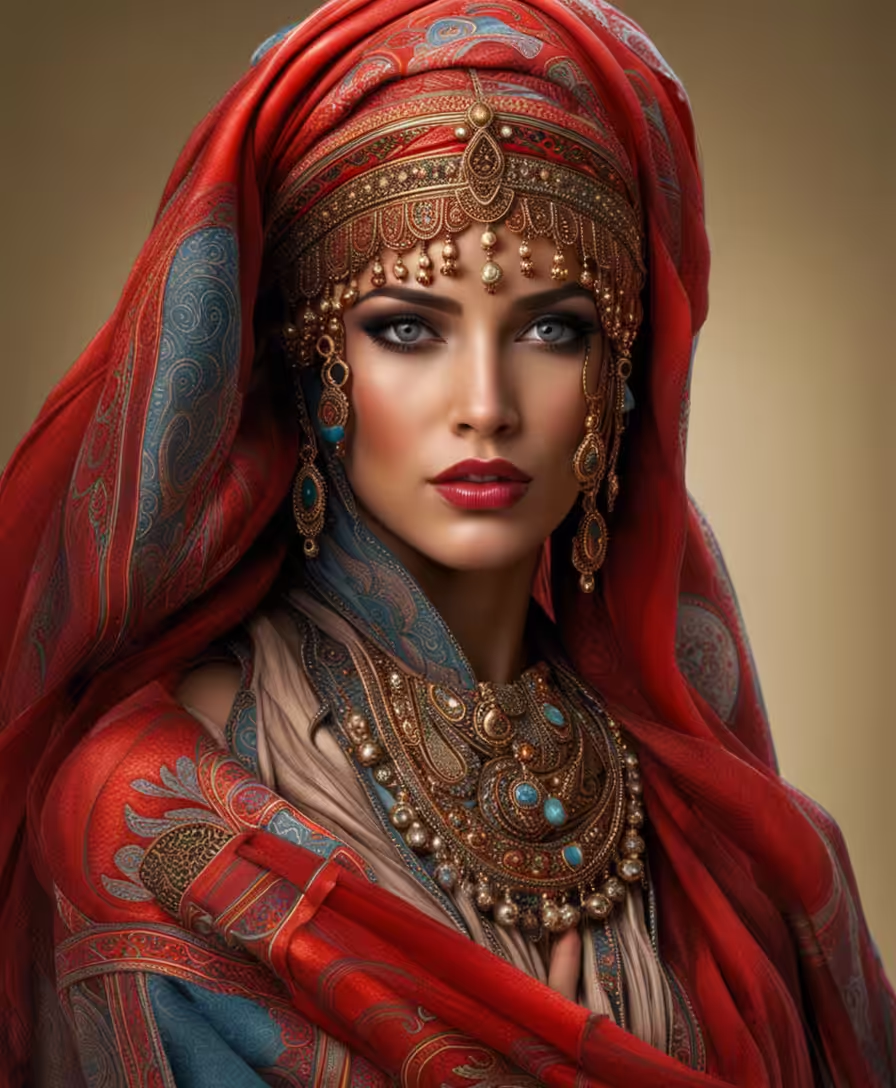
Ai Deep Pressure: Turmina's Ode to Heritage: Elegance Woven in Time
Turmina's exquisite clothing was evidence of her great regard for tradition and her close relationship to the art of adornment. She did not just want to look good; she wanted her extravagant appearance to represent her strong philosophical convictions.
Turmina saw beauty as a means of expressing her admiration for tradition, culture, and the enduring spirit of her Arabian ancestry. Her clothes were a living tribute to the artistic flourishing that the desert had produced. Her body was a canvas, and every gemstone and silk thread was a brushstroke that conveyed a different and rich history.
The headpiece, which was decorated with elaborate, represented her conviction that everything is interrelated. Every pattern served as a reminder to her of the cosmos' unity and the significance of appreciating life's larger fabric.
In addition to being a stunning piece of jewelry, her necklace represented the power that women have wielded for generations. It was an embodiment of grace and strength. It served as her way of honoring the many women who had inspired her and served as role models for her own strength.
In this way, Turmina was dressing up her ideals and convictions rather than merely adorning herself with wealth. She conveyed through her direct and purposeful gaze that each piece of clothing she wore had a tale to tell and that each gemstone was a reminder of the long history of Arabian grace and artistry.
Turmina's extravagance is portrayed in this story as a celebration of her heritage, an expression of her cultural identity, and an homage to the strong and lovely people who came before her. Each gemstone and thread serves as a brushstroke in the painting depicting her as the living embodiment of Arabian heritage.