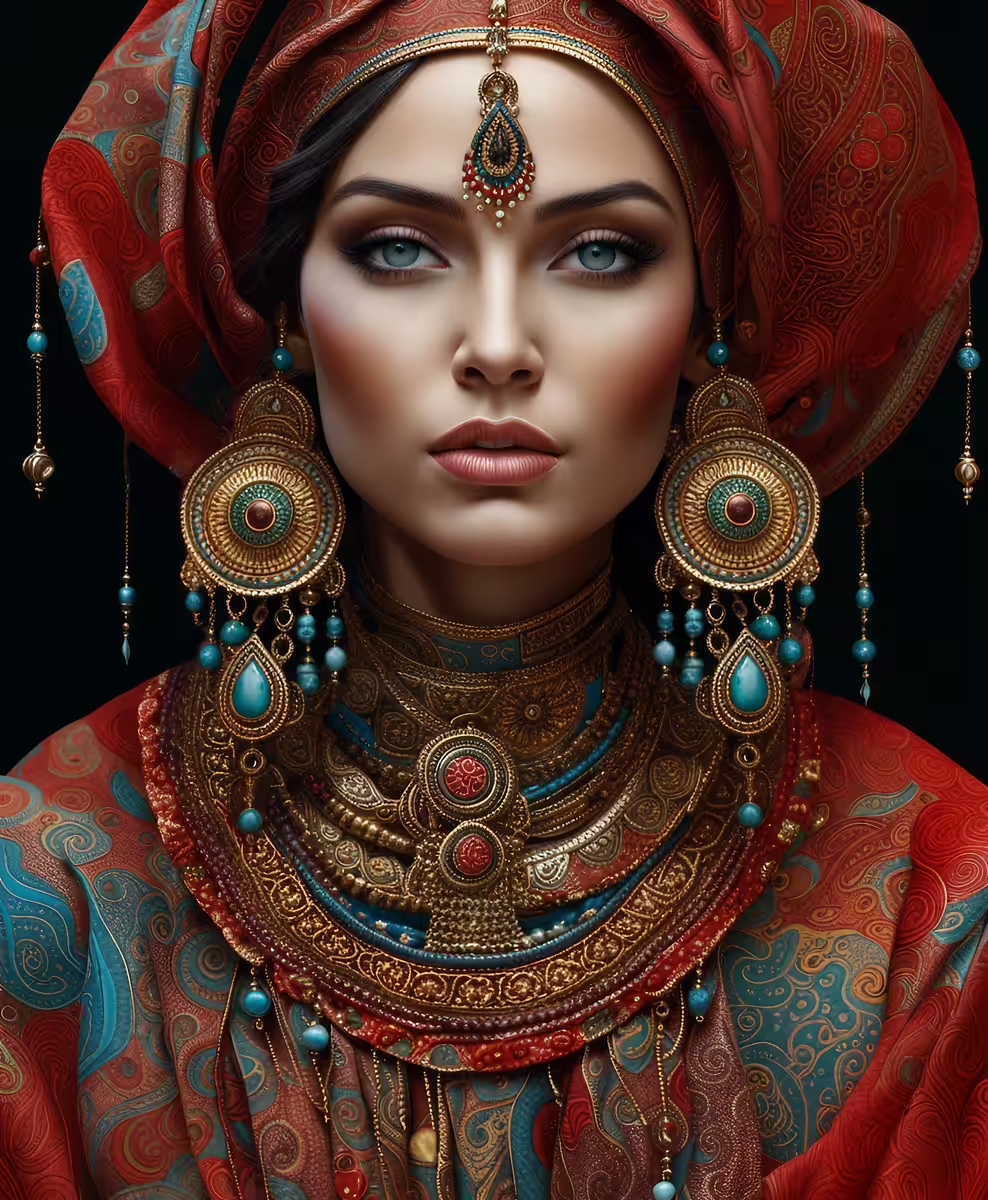
Deep Pressure: "Royal Reverie: Turmina's Ode to Arabian Opulence
In the twilight of an Arabian day, where the desert sands whispered tales of ancient beauty, Turmina embarked on a ritual of self-expression. Her garments were more than mere fabrics; they were a dialogue between her soul and the storied history of her people.
As she donned her attire, she was weaving a narrative of resilience and opulence. Each layer, each jewel, was a chapter echoing the whispers of her ancestors. The headdress, adorned with mandalas, wasn't just an accessory; it was a homage to the cosmic dance of creation, an ode to the boundless interconnectedness of all things.
The necklace she chose was more than adornment; it was a relic, a symbol of the strength passed down through generations of Arabian women. Turmina believed that wearing it wasn't just about looking regal; it was about embodying the unyielding spirit of those who had faced adversity with grace.
As Turmina gazed upon her reflection, her eyes reflected not just the depth of her beauty but the profound connection she felt with her heritage. Her attire was a canvas, and each stroke told a story of survival, triumph, and the enduring allure of Arabian artistry.
Yet, in her opulence, Turmina sought more than aesthetic pleasure. Her elaborate ensemble was a beacon of cultural preservation, a proclamation that tradition and modernity could coalesce harmoniously. It was her way of saying that the echoes of the past resonate vibrantly in the present, and she was the living vessel through which this resonance found expression.
In this moment, Turmina wasn't merely dressing; she was orchestrating a visual symphony, a vibrant testament to the resilience, elegance, and unyielding beauty of her people. Her opulent attire was a mirror reflecting the past, a celebration of the present, and an invitation to cherish the rich tapestry of Arabian heritage.