Universal Venus: The Venus of Cărbuna.
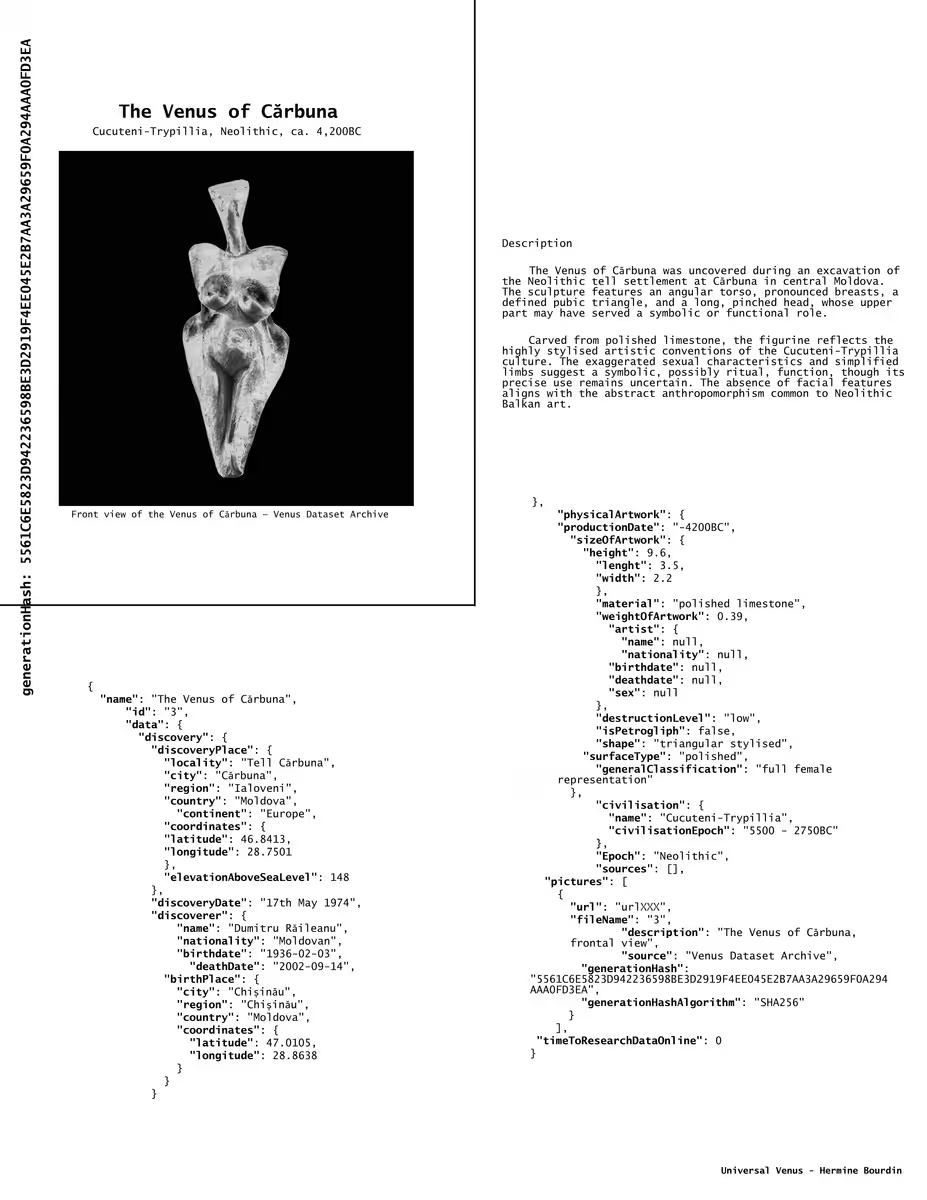
The Venus of Cărbuna was uncovered during an excavation of the Neolithic tell settlement at Cărbuna in central Moldova. The sculpture features an angular torso, pronounced breasts, a defined pubic triangle, and a long, pinched head, whose upper part may have served a symbolic or functional role.
Carved from polished limestone, the figurine reflects the highly stylised artistic conventions of the Cucuteni-Trypillia culture. The exaggerated sexual characteristics and simplified limbs suggest a symbolic, possibly ritual, function, though its precise use remains uncertain. The absence of facial features aligns with the abstract anthropomorphism common to Neolithic Balkan art.
Rematerialized in stone, the virtual body returns to the world of touch. It stands as a relic of futures that never happened.
This speculative data sheet serves as the work’s Certificate of Authenticity and accompanies the physical sculpture. It is the first realized piece from the Universal Venus series and was presented as part of FEMGEN, fourth edition in Paris on October 2025.