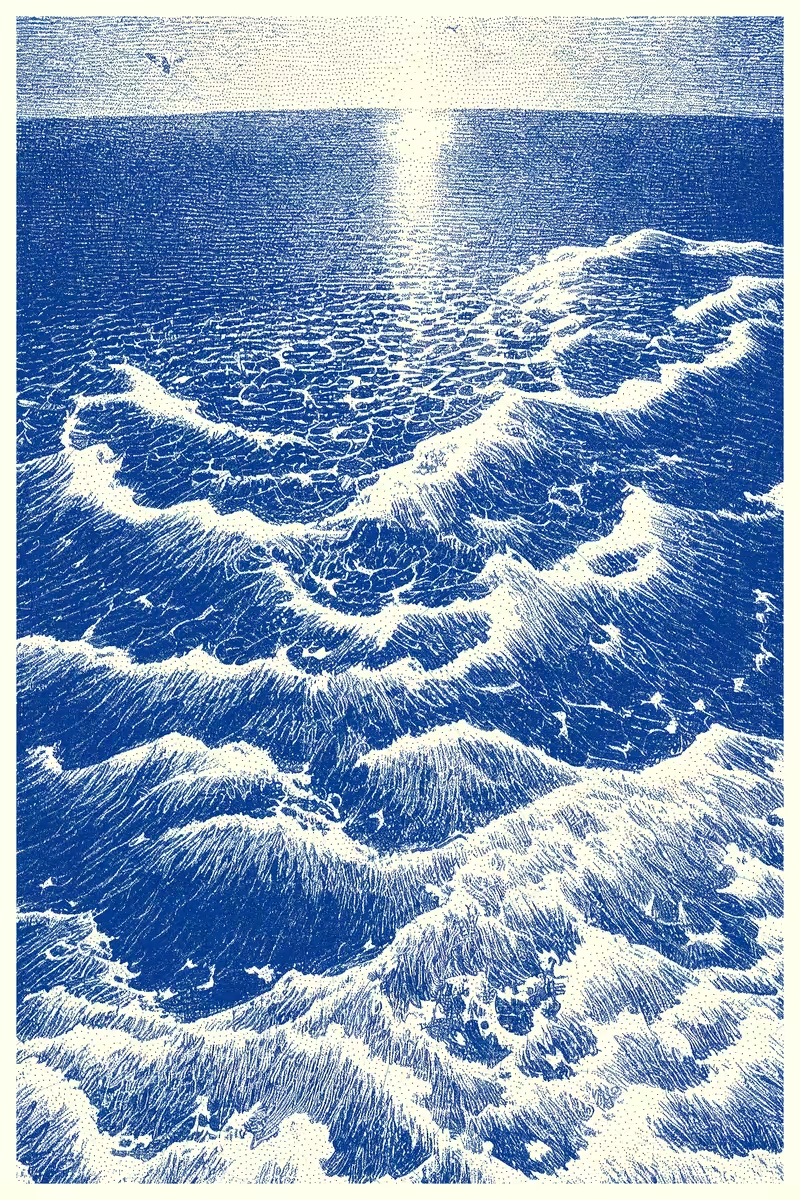
The Living Ocean: The Red Sea
The Red Sea is home to over 1,200 species of fish, around 10% of which are found nowhere else on Earth. Its coral reefs, some of which are over 7,000 years old, host a spectacular array of marine biodiversity, making it one of the most richly diverse marine ecosystems globally.
Due to high evaporation rates and the lack of significant rivers discharging into it, the Red Sea is one of the world's most saline bodies of water. This elevated salinity, combined with the area's unique geological features, creates an environment where only certain adapted species can thrive.
Historically, the Red Sea was a critical part of the Spice Route, facilitating trade between ancient civilizations in Egypt, the Near East, Africa, and Asia. Goods such as spices, incense, textiles, and precious stones were commonly traded.
The Ptolemaic dynasty of Egypt (305-30 BCE) attempted to control navigation and trade through the Red Sea, establishing ports and waypoints that served as early precursors to the Suez Canal route.
Perhaps the most famous myth associated with the Red Sea is the biblical story of Moses parting its waters to allow the Israelites to escape Pharaoh’s armies. This story, central to Jewish, Christian, and Islamic traditions, has inspired countless explorations and theories about the exact location and nature of this event.
Legends speak of King Solomon using the Red Sea as a route to Ophir, a land rich in gold, silver, and other treasures. The exact location of Ophir remains a mystery, but it's often associated with the southern or eastern shores of the Red Sea.
The Red Sea region is also linked to the legend of Iram of the Pillars, a lost city described in the Quran. Some theorists suggest that remnants of this ancient and wealthy city might lie beneath the sands close to the Red Sea’s shores, drawing parallels with the story of Atlantis.
4000 X 6000 PX 300 Dpi
By Samanta,2024