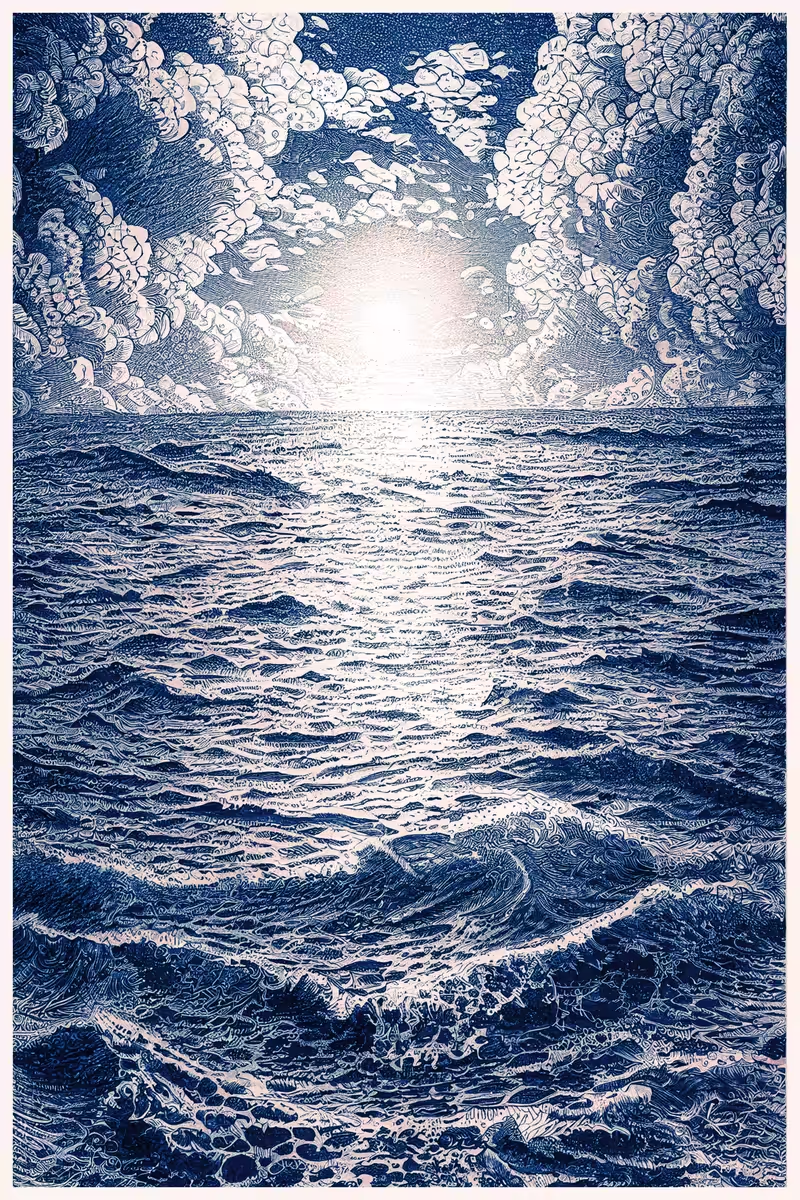
The Living Ocean: The Indian Ocean
The Indian Ocean, known as "Hindia Ocean" in some regions, is not only the world's third-largest ocean, spanning from the coastlines of Africa, Asia to Australia, but it also stands as a massive classroom, brimming with lessons in history, geography, and culture.
The waters of the Indian Ocean have long been a highway for commerce and culture. Early seafaring societies, such as the Indus Valley civilization, navigated its currents as early as 2000 BC. In the centuries that followed, Arab and Chinese merchants would traverse these waters, establishing trade routes that would later become part of the renowned Silk Road. These journeys influenced the exchange of goods, ideas, and technologies among disparate cultures and civilizations, reshaping the contours of the world as we know it today.
Geographically, the Indian Ocean is home to astounding natural features that make it a subject of scientific fascination. Its underbelly houses the Ninety East Ridge, a 5500 km-long underwater mountain range. Moreover, it cradles the Sunda Trench, the deepest point in the open ocean floor, offering insights into the mysteries of marine geology and life forms in the deep sea.
From a cultural and mythological perspective, the Indian Ocean holds significant importance. In Hindu mythology, the ocean is considered the dwelling place of Varuna, the god of all waters. Similarly, Indonesian folklore tells tales of the Queen of the Southern Sea, a powerful goddess who resides in the ocean, underscoring the deep connection between human societies and these vast bodies of water.
Through all these lenses - historical, geographical, and cultural - the Indian Ocean offers countless learning opportunities, teaching us about our world's interconnectedness, our past, and the incredible natural phenomena that lie beneath the ocean's surface.
By Samanta, 2023