It is written in A Dream of Red Mansions that the beautiful nun Miaoyu uses rare and mystical water to brew tea: snow-melt of a winter five years before, collected from the plum blossoms whose aroma coils around the tombs of her temple. So, too, is it written in the ancient Chinese medical treatise, Zun Sheng Ba Jian, “tea accompanied by snow, a clearer taste will flow; it is the water which carries the energy of the sky.” Fundamental to Taoism is the pursuit of a balance between yin and yang. Yin is associated with the earth, and yang with the sky. Thus the tea leaves are qualitatively yin, and matched with yang water—rain, snow, dew—joined and blended through a process of precisely applied heat, a cup of sweet and fragrant tea is created, harmonizing the elements of yin and yang. This is but a small sample of the esoteric knowledge and tasteful care that the ancients applied to their appreciation of tea.
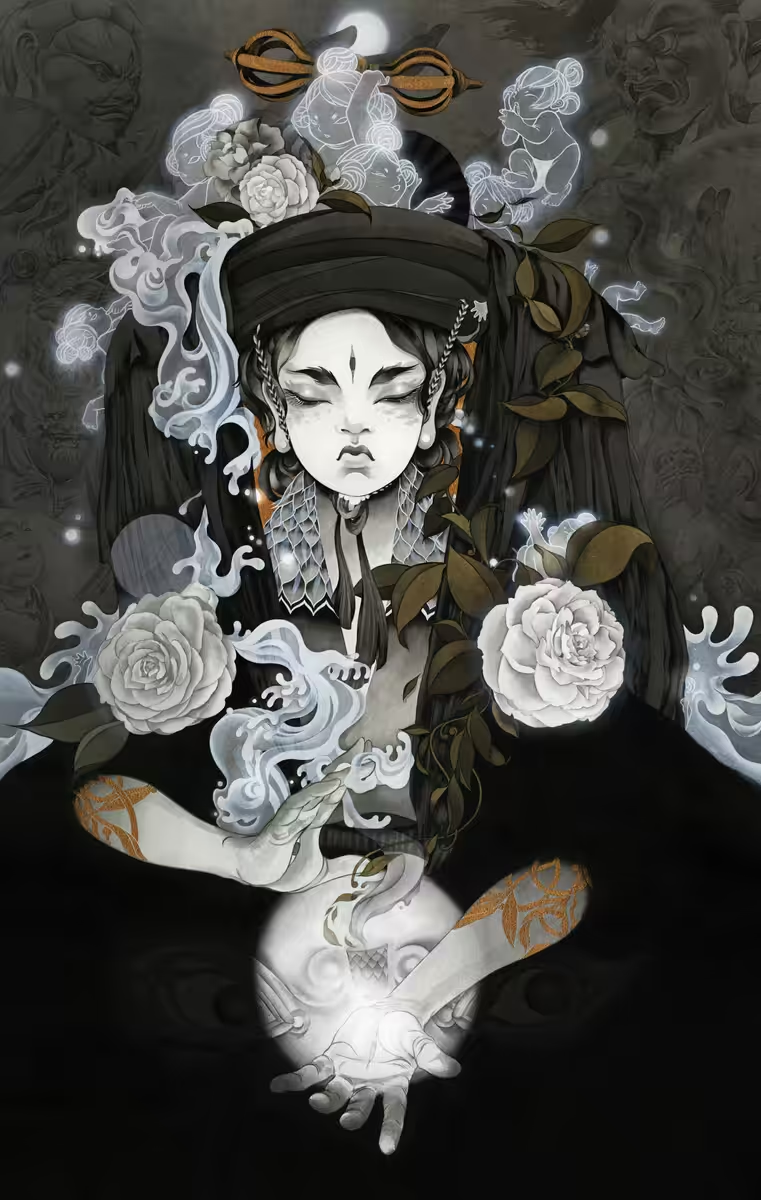
The tea fairy is the central focus of this work, and the clarity of her expression and the meditative focus in her closed eyes reveals her majestic nature. Centered in front of the Tea Fairy’s chest, we can see a wisp of celestial water descending through a bouquet of tea leaves and camellia flowers into the tea cup above the fairy’s palm. The image further employs a symmetrical and well-balanced composition to reflect the sense of ritual as well as the spiritual connotations of Chinese tea culture.
The more static focal points of the image are complemented by the dynamic details of the busy little fairy children, the imposing and statuesque Vajrayana guardians in the upper corners, and the subtle yet fierce eyes below, glancing into the void. The overall effect is to elicit a harmonious balance through contrast: solemnity and levity, indifference and joy. Thus, it expresses both the physical corporeality and spiritual essence of this crucial component of Chinese culture; not only the taste of tea, but its meaning, as well.