Incantation
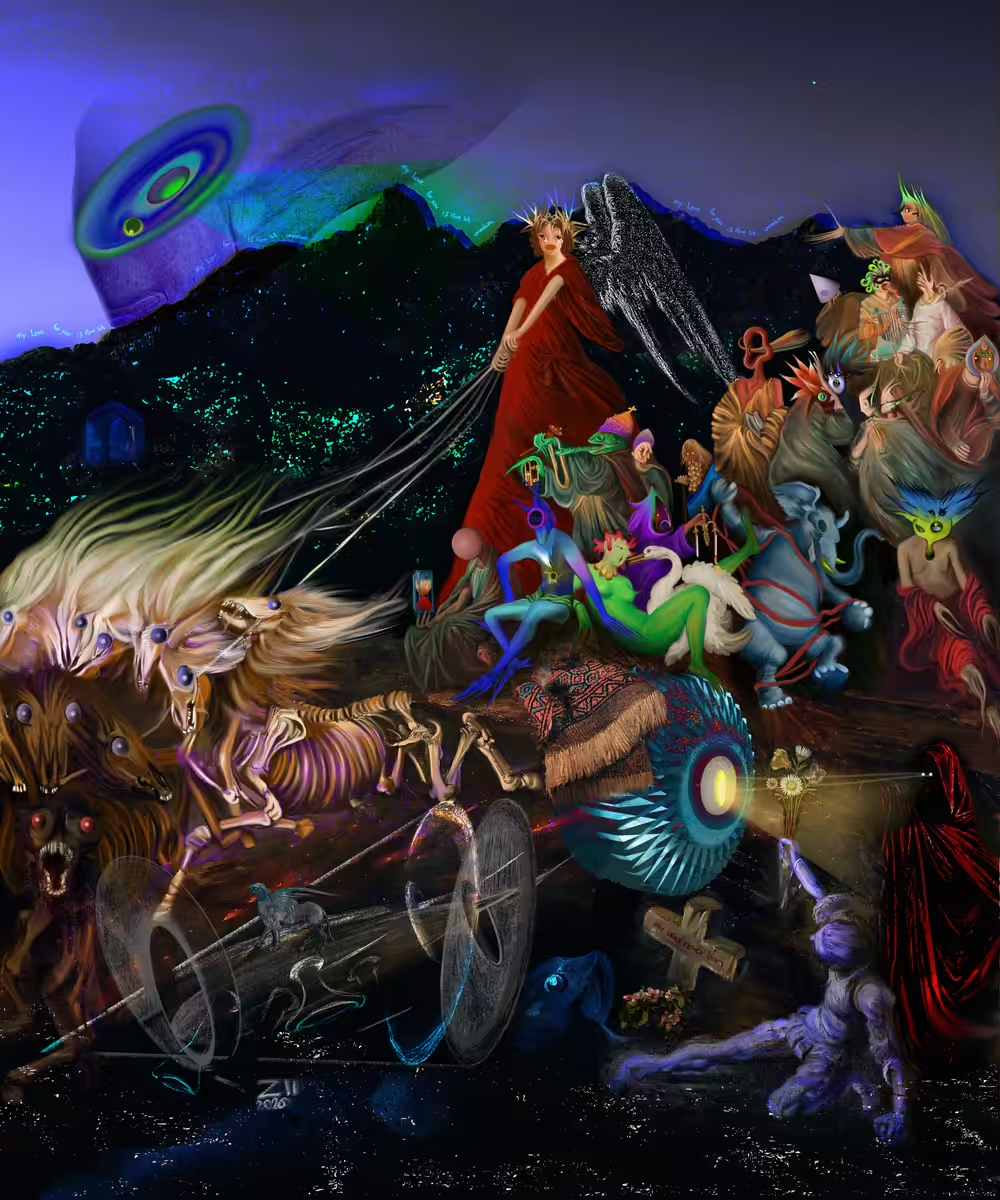
This work is inspired by Théophile Schuler’s The Chariot of Death (1848–1851). While its overall composition references Schuler’s painting, its focus shifts from death to the enduring consequences of history, memory, and the alteration of time.
The background depicts Mount Karkas, near the city of Natanz in central Iran, where an ancient natural landscape exists alongside one of the country’s most significant nuclear facilities.
Inscribed across the sky is the phrase, “My love for you is like pure uranium,” transforming uranium from a political material into a metaphor for a force capable of both creation and destruction.
The title, Half-Life, is borrowed from nuclear physics, referring to the time required for half of a radioactive substance to decay. Here, the term becomes a metaphor for memory, love, and historical events whose effects continue to resonate long after the moment of their occurrence.