Highrises: Highrise #69
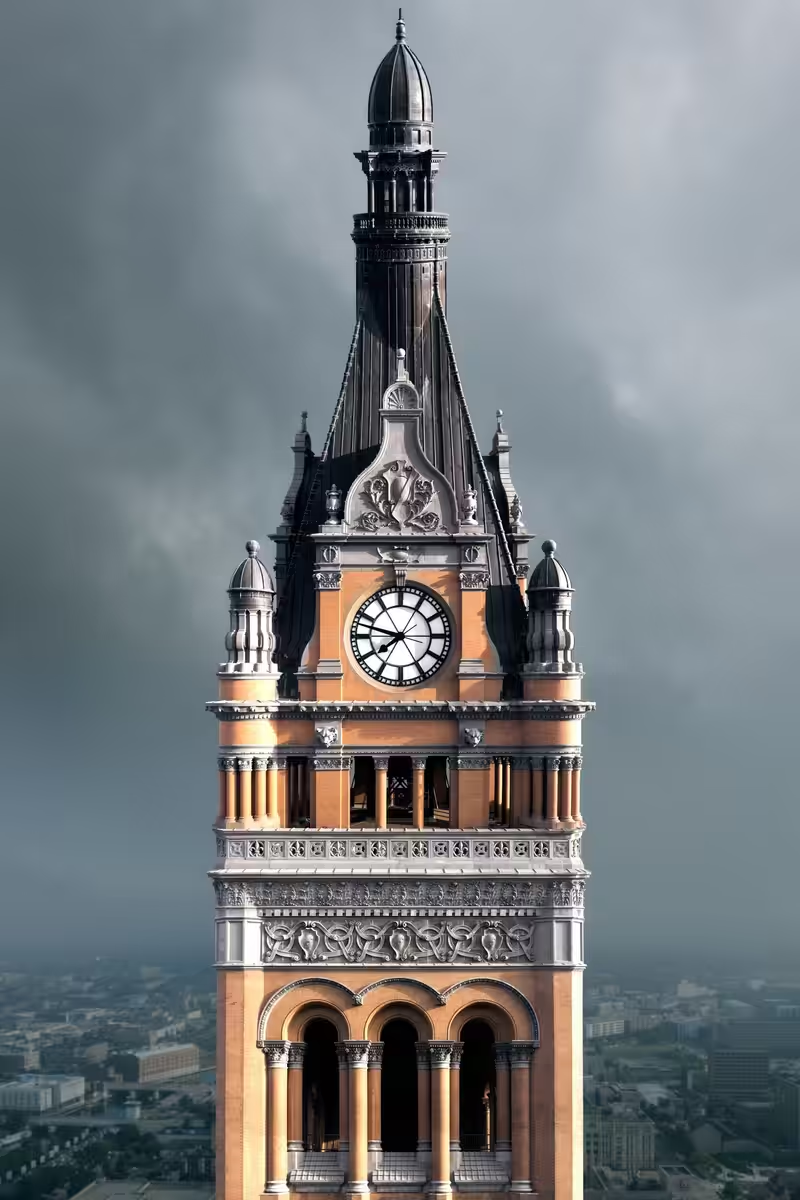
Milwaukee City Hall
Art by: Chris Hytha
Story by: Mark Houser
When Milwaukee held a nationwide design contest for their city hall in 1891, few were surprised when the winning entry was a German Renaissance-inspired design drawn up by a German-born architect. A quarter of the population of the city known as "German Athens" were immigrants from the Fatherland, the most of any U.S. city.
The enormous belfry was 353 feet tall even without counting a 40-foot flagpole, meaning that, for a moment in history, Milwaukee had a highrise taller than anything in Chicago or New York. History was made again in 1910, when Emil Seidel took office here as the first Socialist mayor of a large American city.
This building was designed before steel framing was universal. Its load-bearing walls support their own weight, as well as the building’s most remarkable feature: seven stories of floating wrought iron walkways that hang dramatically over the tiled atrium floor.
Intended for the simple task of getting from the stairs to the offices on each floor, the walkways became a popular spot for committing suicide during the Great Depression, prompting the city to stretch protective netting across the void in 1935. It stayed for more than 50 years, until the walkways were restored to their full vertiginous glory.