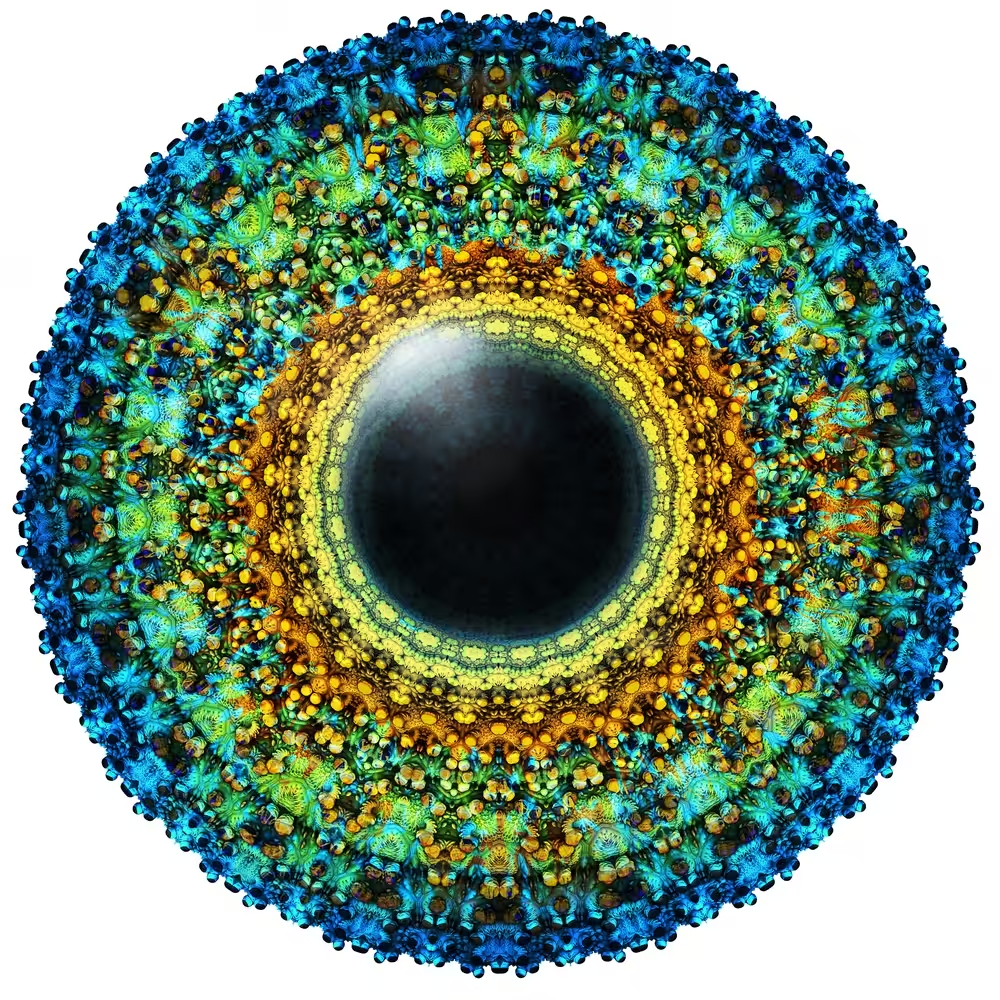
Paradigm
“Perception requires imagination because the data people encounter in their lives are never complete and always equivocal. [...] The only part of our field of vision with good resolution is a narrow area of about 1 degree of visual angle around the retina’s center, an area the width of our thumb as it looks when held at arm’s length. Outside that region, resolution drops off sharply. To compensate, we constantly move our eyes to bring the sharper region to bear on different portions of the scene we wish to observe. And so the pattern of raw data sent to the brain is a shaky, badly pixilated picture with a hole in it. Fortunately the brain processes the data, combining input from both eyes, filling in gaps on the assumption that the visual properties of neighboring locations are similar and interpolating. The result - at least until age, injury, disease, or an excess of mai tais takes its toll - is a happy human being suffering from the compelling illusion that his or her vision is sharp and clear. We also use our imagination and take shortcuts to fill gaps in patterns of non-visual data. As with visual input, we draw conclusions and make judgements based on uncertain and incomplete information, and we conclude, when we are done analyzing the patterns, that out “picture” is clear and accurate. But is it?” - Leonard Mlodinow, The Drunkard's Walk: How Randomness Rules Our Lives