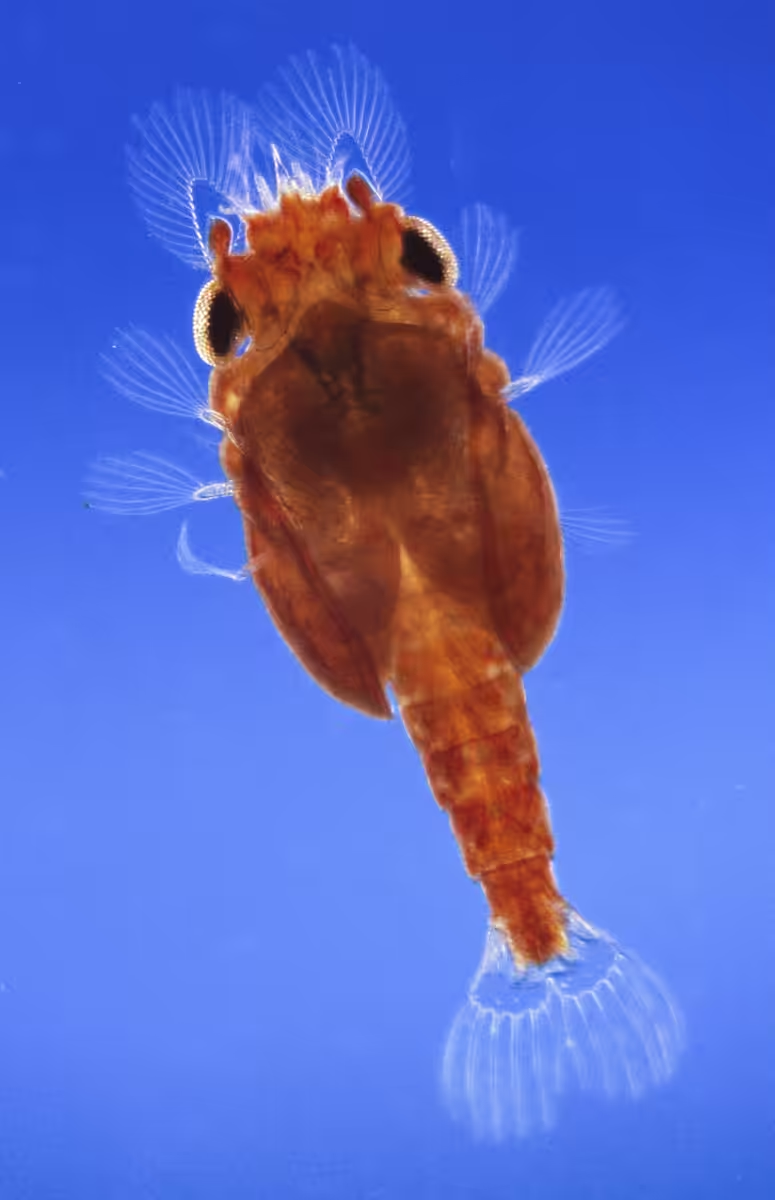
Invisible Oceans Founder's Collection: Invisible Oceans #22: Caridae I
Chris Parks, 2023 — on Manifold
Owned bychrisparks.eth
Description
Whereas most Caridae, or shrimp, larvae are transparent, a few have strongly pigmented exoskeletons and/or organs and muscles. This robust Shrimp species travels backwards as often as forwards, ably controlled by the actions of its tail or telson, with which it can flick itself backwards in the 'blink of an eye', in order to avoid predators. The pigment that is the skin when that is shed, is usually withdrawn from the exoskeletal segments before change takes place, as is some of the calcium with which all Crustacean skins are endowed, so as to preserve a relatively valuable hardening component of the skin, so essential for protection.
Lizard Island, Australia (2002)
Nikon F3 | Custom Optics | Fuji Velvia
On-chain
Market
Provenance