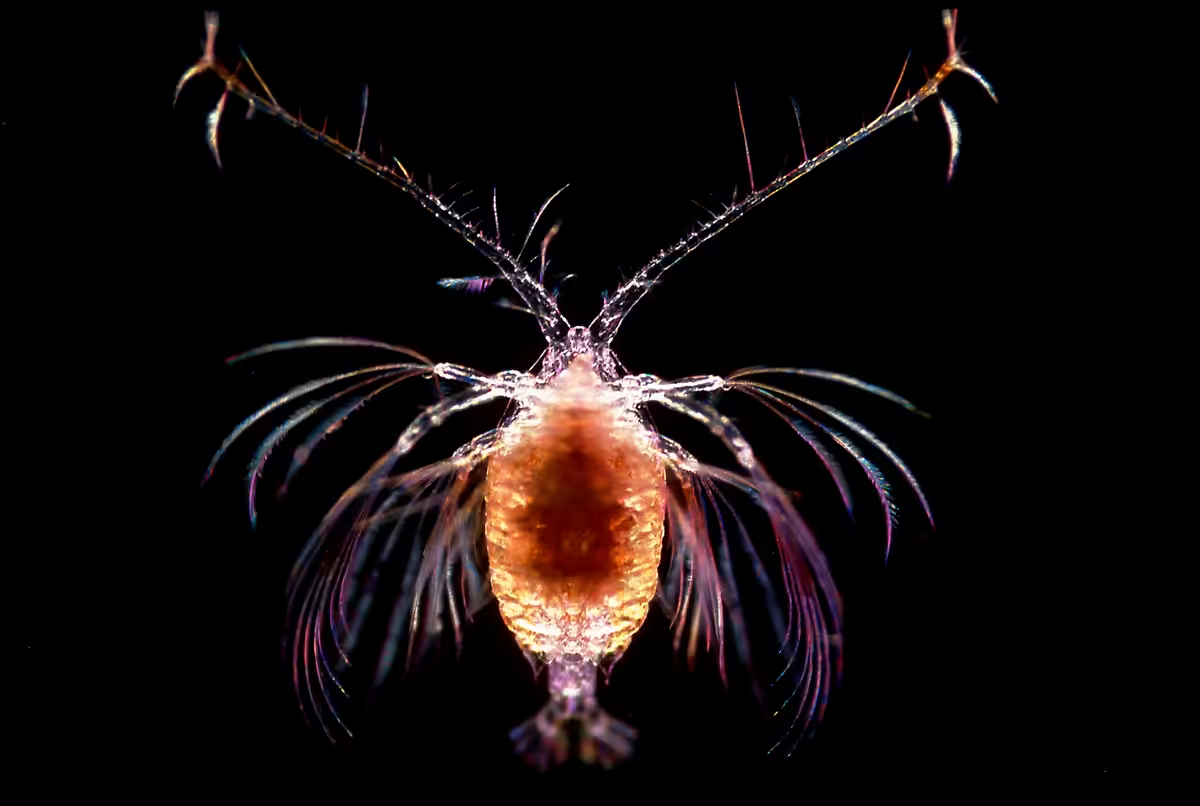
Invisible Oceans Founder's Collection: Invisible Oceans #10: Temora I
This is a typical Copepod species, possibly Temora. These small crustacean members of the plankton community are amongst the most numerous creatures on the face of the planet and they are sometimes compared to the huge flocks of wildebeest and zebra on the grassy plains of Kenya and Tanzania, not because of their numbers, but the fact that they too are herbivores and they supply many of the predators with sustenance. Copepods do the same sort of thing in the oceans. They feed mainly upon the microscopic plant life that forms the base of the colossal pyramid of life that converts sunlight through the plant forms then are devoured by the Copepods and, they in turn, form the main food source for the billions of predatious schooling fish, like herring, sardine, pilchard, mullet and anchovy. Many of these fish, of course, form major sources of food for us humans. Copepods are crustacea, like shrimps, crabs and lobsters. They have to change their skins many times in order to allow for their increase in size as they mature.
Bermuda (1996)
Nikon F2 | Custom Optics | Fuji Velvia