Winter Before the Fall
Still Wearing the Hardware
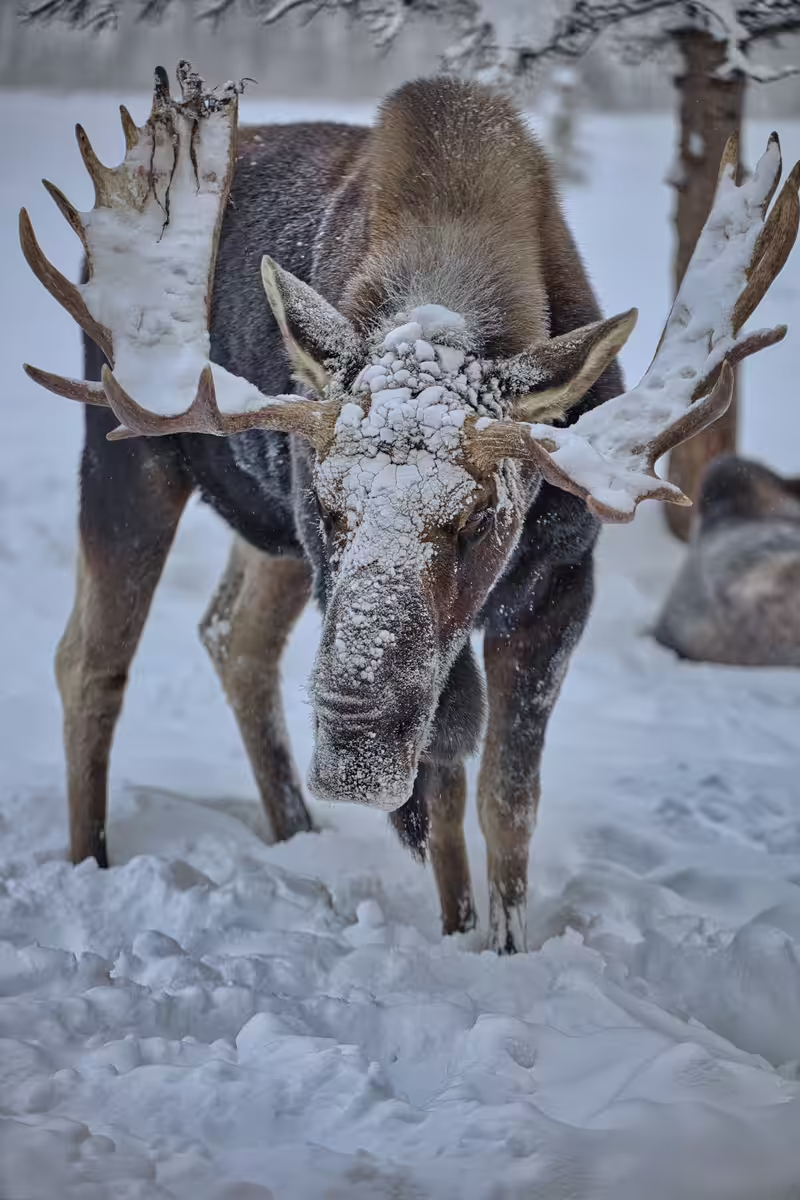
A bull moose stands ankle-deep in fresh powder, snow crusted across his muzzle like he lost a fight with a bag of flour. Both palms of his antlers are still attached — and still catching snowdrifts, because that's what a five-foot-wide rack does in a snowstorm. He looks less like the largest deer in the world and more like a guy who fell asleep outside and hasn't checked a mirror.
He won't be wearing them much longer. Once the rut winds down and testosterone drops, a layer of bone at the base of each antler is resorbed until the whole apparatus — up to 40 pounds of it — simply falls off. Mature bulls usually drop in late November through December. It happens fast and without ceremony: a shake of the head, a step over a log, and a rack that took five months and enormous metabolic investment to grow is lying in the snow. Bulls have been known to spook at the noise.
That discarded antler doesn't go to waste. It's a dense package of calcium and phosphorus dropped into a landscape where both are scarce in winter, and the forest eats it. Squirrels, mice, voles, porcupines, and foxes gnaw sheds down to nothing, recycling minerals into the bones and teeth of animals that will never grow an antler themselves. Nothing in a healthy northern forest lets that much free calcium sit around. Meanwhile the moose that grew it is doing his own work on the ecosystem — browsing willow and birch hard enough to shape which trees grow where, opening light gaps, feeding wolves and bears and ravens, moving nutrients between wetlands and uplands with every mouthful.
All of which requires a place to do it. Moose need young deciduous browse for food, dense conifer stands for shelter and snow relief, and cold water and wetlands to survive summer heat — and they need those things connected, not scattered across a map with roads through the middle. Warming winters are pushing winter tick loads and heat stress into moose range faster than moose can adapt, and fragmented habitat leaves them no room to move. Protect the willow flats, the wetlands, and the unbroken forest between them, and you protect a fertilizer-distributing, forest-editing, antler-donating giant who will spend his winter looking exactly this dignified.
He'll grow a new set by spring. He will look no more graceful about it.