Wild Reflections: An Introspective Encounter
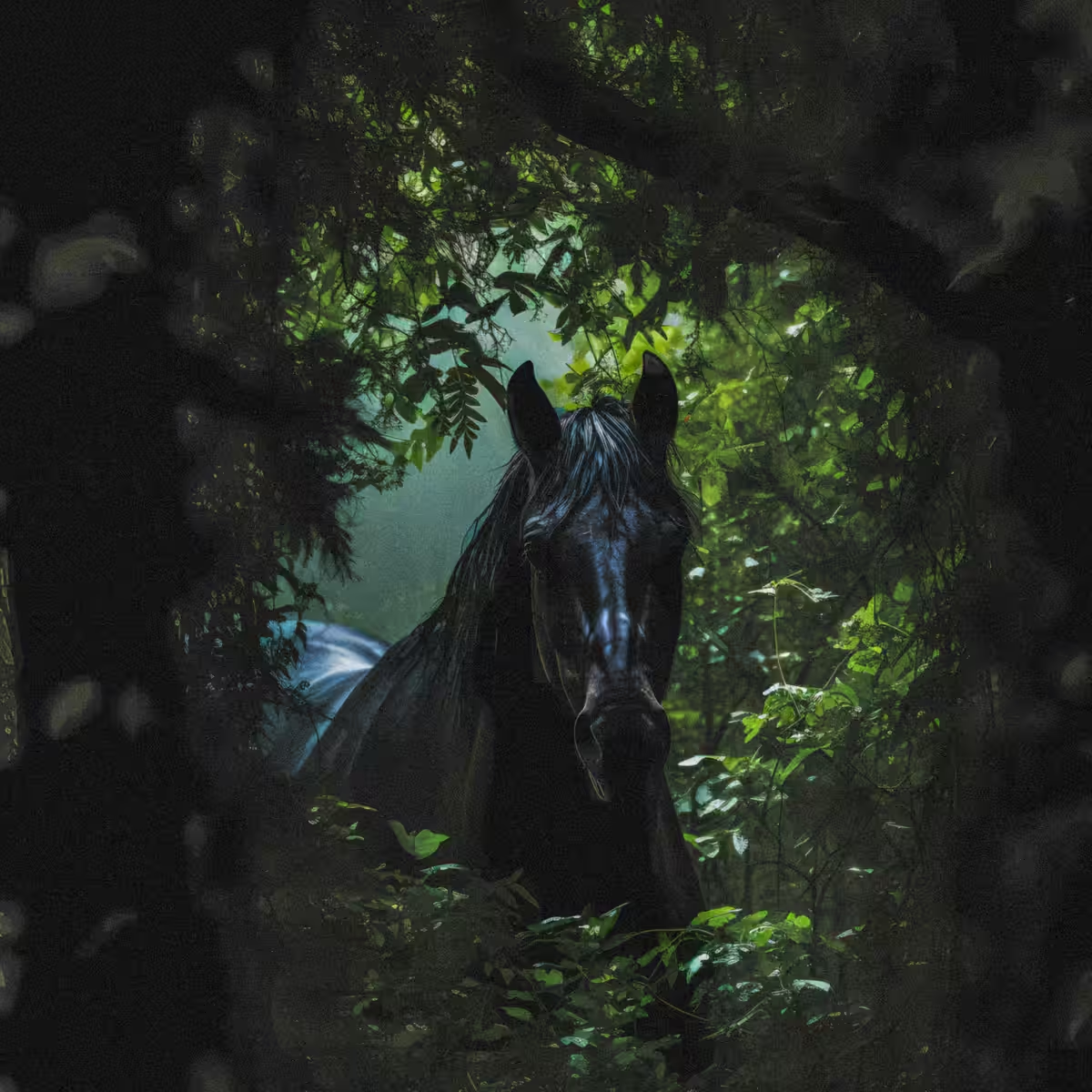
An extraordinary scene unfolds where the boundaries between reality and mystery become blurred. A black horse emerges gracefully, partially concealed amidst the dense foliage of branches and bushes. The setting evokes a sense of an untamed realm, reminiscent of a mystical jungle or an enigmatic woodland, yet it remains unidentifiable, beckoning the viewer into a realm of uncertainty.
As the horse peers through the vegetation, its penetrating eyes lock onto the viewer, capturing their attention with an intensity that cannot be ignored. The ears are perked up, revealing a heightened state of alertness, as if the horse is carefully scrutinizing the observer in return. This mutual examination invites introspection, compelling the viewer to delve beyond the surface and contemplate their own presence in the artistic experience.
The horse's immense muscular form exudes strength and power, accentuated by the interplay of light that caresses its sleek coat, illuminating its back. It is a creature of undeniable grace and majesty, embodying a primal energy.
The framing of the composition by the branches serves a dual purpose. From the viewer's perspective, it creates a sense of peering through a natural window, heightening the feeling of being a participant in this encounter. Simultaneously, from the horse's perspective, the branches symbolize the act of scrutiny itself, as if both viewer and horse are engaged in a reciprocal examination. This symbiotic relationship between subject and observer underscores the notion that appreciating art involves not only an exploration of the artwork itself but also a reflection upon one's own perceptions and interpretations.