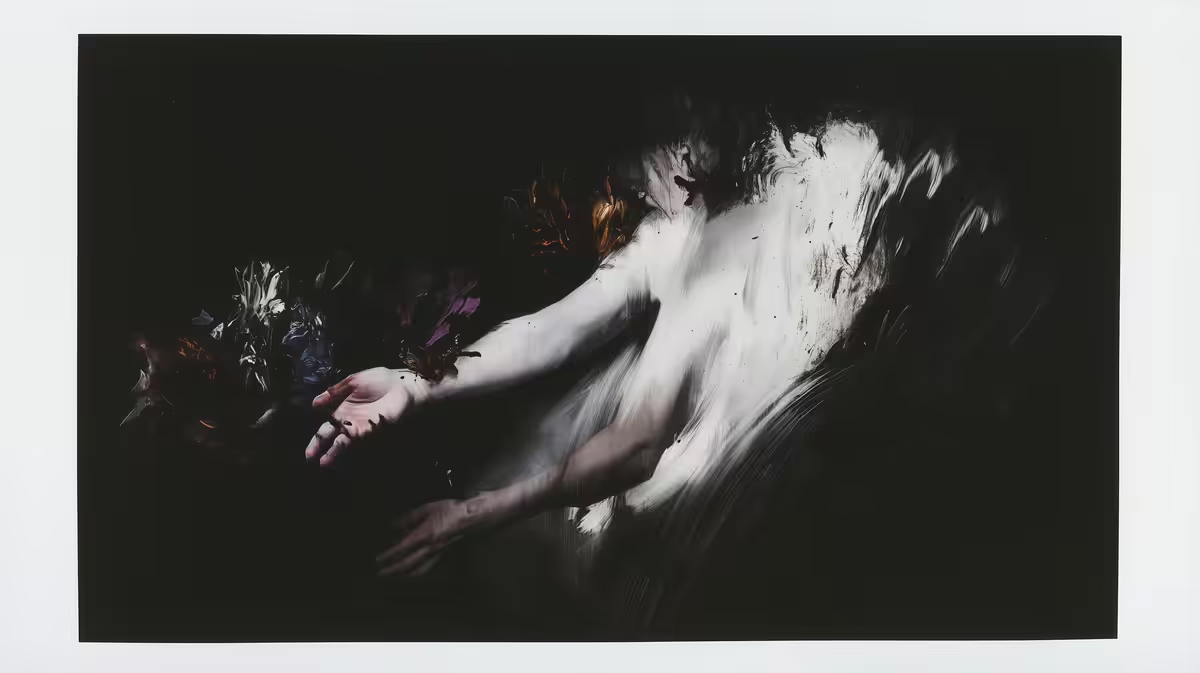
The Body as Floral Memory Carrier
In an era of dematerialized bodies and liquid identities, Florilegium Obscurum presents a series of works that resist digital erasure. These images propose the body as a floral archive, a site of opacity, rupture, and haunting sensuality. Petals, skin, pigment, and loss converge into visual fugues of fading presence.
The floral motifs are not decorative symbols of decay. They are wounds. Parasites. Poetic contaminants embedded in flesh. The flowers grow from these bodies like spectral errors in memory, like corrupted pixels in an intimate archive. Each figure appears caught mid-transformation, blurred, veiled, displaced. Unreadable. These bodies do not offer meaning but demand reverence for what remains ungraspable. They exist in a liminal state, between digital ghosting and painterly rebirth.
Drawing on Édouard Glissant’s opacity, Donna Haraway’s cyborg theory, and the aesthetics of Francesca Woodman and Baroque still lifes, the works form a posthuman elegy. Not a memento mori, but a florilegium of instability.
In a time when physicality dissolves into data, these images reclaim the body as a terrain of visual resistance. Florilegium Obscurum articulates a poetics of memory that blooms through rupture, not continuity, through distortion, not preservation.
These bodies do not bloom from life. They bloom from disappearance.