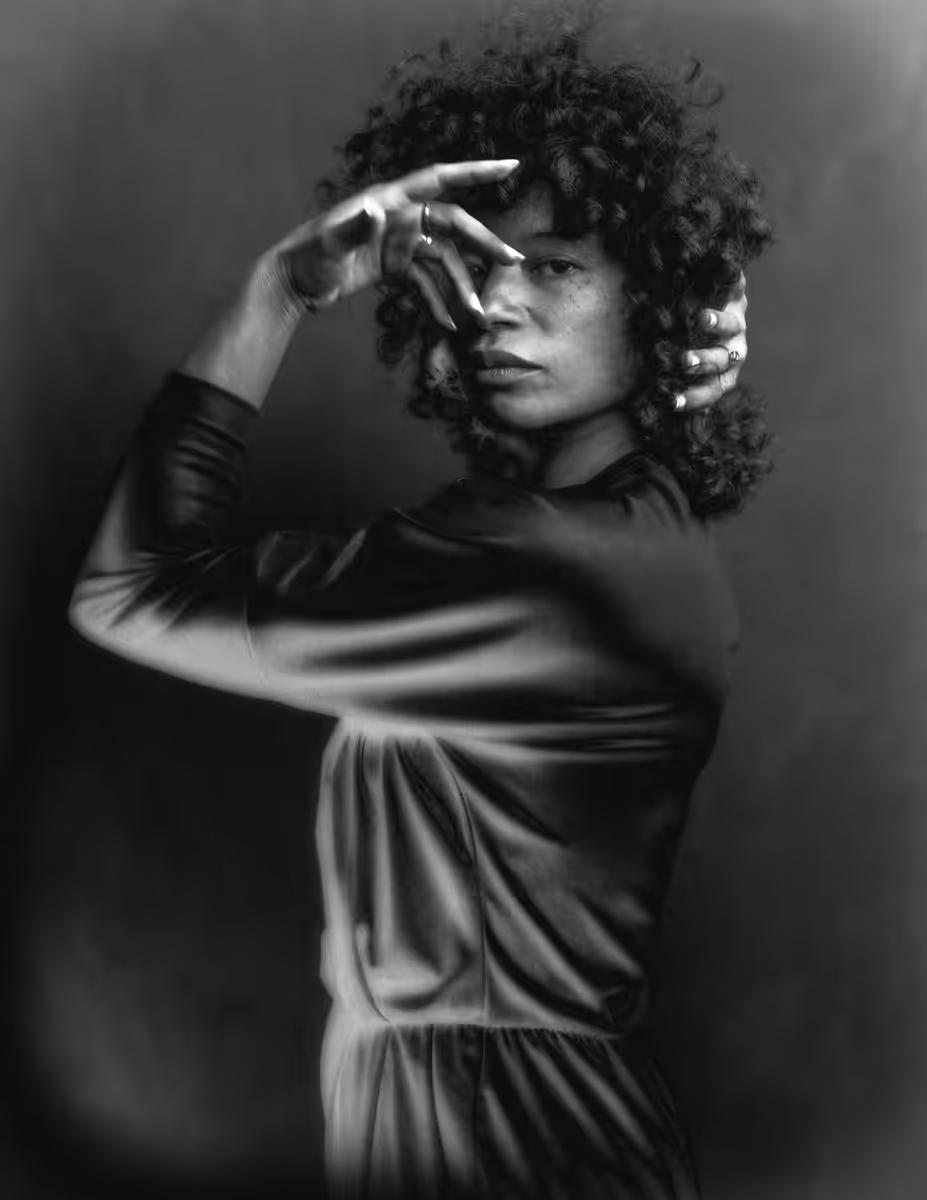
Vânia
Vânia is a Portuguese born Angolan dance creator and interpreter. Both of her parents are Angolan and traveled to Portugal as teenagers after Angola’s Independence from Portugal in 1975. One of Vânia’s grandparents and great-grandparents on either side was Portuguese and, because only those with direct Portuguese heritage were allowed to earn Portuguese nationality, her parents and family were allowed to leave Angola and move to Portugal. Vânia talks about her family having to negotiate where and when to perform their Angolan culture habits in order to fit in with the Portuguese, after all, Angola was left in a Civil War and Portugal was the saviour giving them an opportunity. [Vânia says this with a cynical tone].
Vânia lived in New York City for 8 years and it was during that period she began to fully embrace her heritage. While there, Vânia would say she was from Portugal to the inevitable “Where are you from?” questions. She soon realised that not mentioning her Angolan side was as good as denying it. Many Black people in the US have no idea where their families originated. This made her realise how much of her racial identity and how much internalised racism she had inherited from Portuguese culture. This was the very first time Vânia saw herself as privileged and that her African heritage was a thing to be proud of.
Being mixed is constantly feeling in-between, which makes it harder to belong. It often means being regularly asked where you are from and not being recognised as being where you actually are from. The complexity of genetics and the way people look, added to her racial identity conflicts that led to a late realisation of what she may identify as, independently from who is looking back. Because of that and how different people can look even within the same family (like her own), Vânia embraces the fluidity of her identification as it is constantly affected by the context, content and subjects in the conversation.