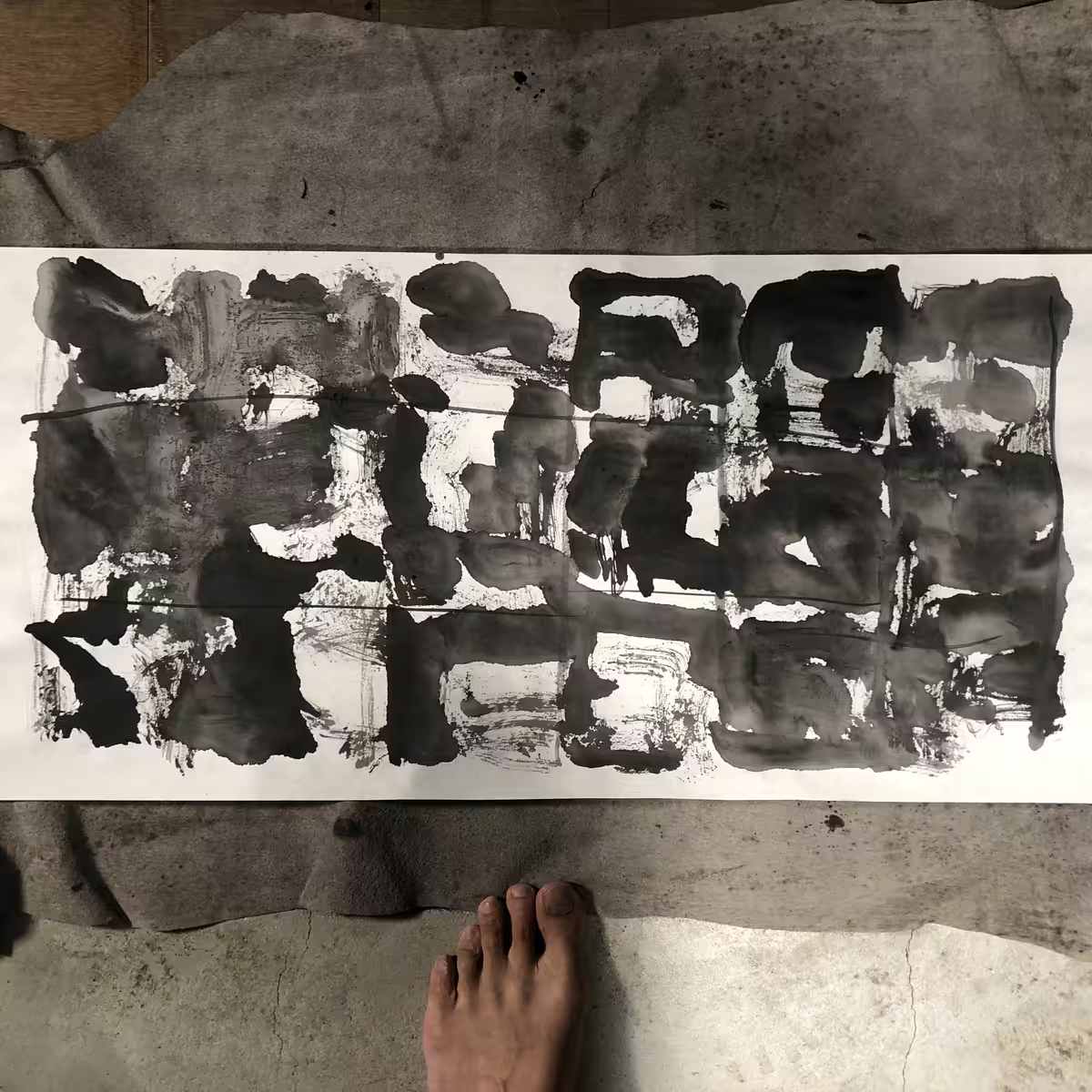
(un)//void//ble: 3x3
This is a reverse attempt of calligraphy that is asemic but from consciousness of the generative program from (un)//void//ble: https://www.fxhash.xyz/generative/8757
99% of what is read in calligraphy is almost always reduced to two dimensions. What we see is, invariably, is no more than the 1% displayed on that plane, whether it may be scrolls, stones or screens. Though calligraphy can be read in its visual form. And this doesn’t imply, necessarily, in reducing the work to the abstract. For there is commonality, in form and in content, and that any context at a given time is bound to its hierarchical yet fluid structure.
Like the difference and relations between meaning and language: the represented and what it is a representation of, the expressed and its expression, evolves in its meaning and in its language, and it makes no differentiation to the stages of cognition, perception and sensation. At any time it is subject to change due to precisely the differences in the uncommon other.
What is the commonality, is the interpersonal, and extrinsic. It is at the same time, intrapersonal, and is in its uncommon other. In a work, its figuration and its abstraction is one the same and different. Different languages can be used as attempts to express meaning. And meaning only really becomes extrinsic when figuratively represented in language, or more generally in symbols, a codification in forms, and of forms, is then meaning is then retaken in its current form of codification, abstracting the common and the figuration of uncommon others. Intrinsic meaning might exist in the absolute, anything absolute is probably meaningless.
Whether each brush stroke makes up a character, and characters make up sentences that speak of something, each brush stroke and the tactile interface between brush, paper and ink, is speaking-in-itself, speaking-for-itself. Nothing can be spoken of by nothing.
Reading a calligraphy scroll is different to seeing it. But it is also not so different. Seeing is forgetting the words you read. One does not really read the force pushed from the hand handling the brush that applies ink onto the paper. Nor do we read the velocity from the brush pulled away from its stationary point. We see them. We see what is expressed and represented. We see the representation expressed, and expression represented.