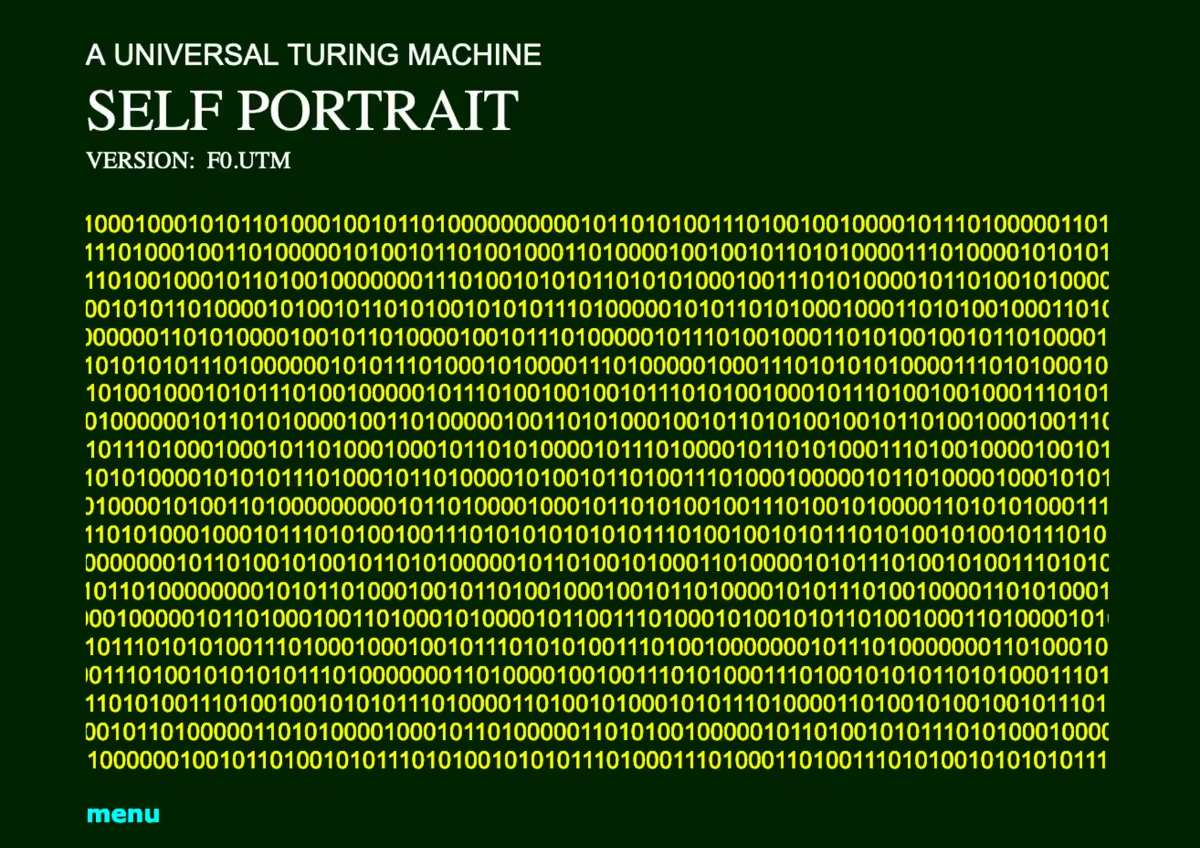
Universal Turing Machine Self Portrait, Version F0.UTM
Roman Verostko created his Universal Turing Machine Self Portrait in celebration of Alan Turing’s seminal text, On Computable Numbers (1936). Turing’s paper outlined a procedural method for deciding all “decidable” statements and ultimately identifies the concept underlying all of computing, now ubiquitous within global society.
Verostko became captivated by the Universal Turing Machine procedure or “meta-algorithm of algorithms” as described in The Emperor's New Mind: Concerning Computers, Minds and The Laws of Physics (1989) by Sir Roger Penrose, noting,
“To me it symbolized a historical turning point in the human ability to manage extensive rational procedure. Many are not aware of the time when ‘computers’ referred to humans who did the computing. Those who recognize the power of algorithmic procedure implemented with computers will appreciate the beauty and power of Alan Turing’s contribution and recognize its special place in the history of ideas.”
This historic version of Verostko’s Universal Turing Machine Self Portrait Version F0.UTM, was written by Steven V. Gunhouse, Ph.D., and employs Fibonacci numbers as the basis for its organization as it is believed Alan Turing maintained a special interest in Fibonacci numbers in relation to biomorphic structures. Recognizing that Fibonacci numbers have a revered place in the history of art, F0.UTM, also known as the “Gunhouse version”, employs digital typography colored in #ffff00 to signify the proportions of “the Golden Ratio”.
Running continuously, the movement of the binary digits are intended to suggest the movement of the tape in Alan Turing’s original conception. The scrolling feature allows the full text to be virtually present within the physical limits of the window frame. The marquee movement displays the entire sequence, flowing back and forth from left to right.
F0.UTM is a variable work that has taken several forms since the webpage first went live in 1999, including versions of the source code that are no longer supported by contemporary browsers, altered rates of movement, or distinct changes in background and font color. Verostko envisions that these variables may continue to evolve in and beyond his lifetime.
Thumbnail not for exhibition. First version of the work was created in 1999. Current version has existed since at least 2016.