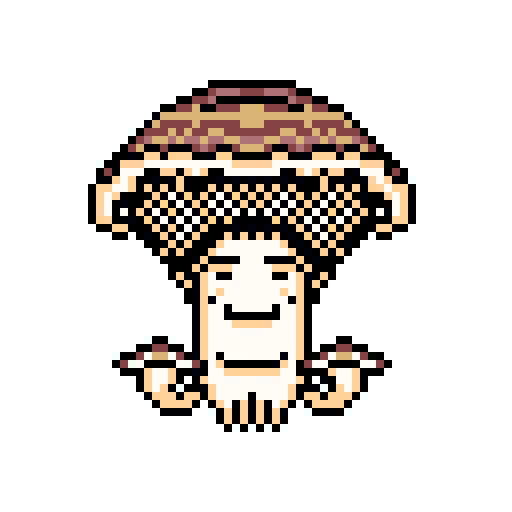
Trametes Versicolor "Turkey Tail"
@cryptomushii
Trametes versicolor, often called the "turkey tail," has the dubious distinction of being the only member of the forest fungal fowl community not named for the full bird, but a feathery fraction. However, the chicken of the woods and the hen of the woods look nothing at all like chickens or hens, while the turkey tail does look (vaguely) like a turkey's tail.
Trametes versicolor is one of the most common mushrooms in North American woods, found virtually anywhere there are dead hardwood logs and stumps to decompose—and, occasionally, on conifer wood too. Its cap colors are extremely variable, but tend to stay in the buff, brown, cinnamon, and reddish brown range. The mushrooms are strikingly "zonate" with sharply contrasting concentric zones of color, and the surface of the cap is finely fuzzy or velvety. Often the zones represent contrasts in texture as well as color, so that fuzzy zones alternate with smoother ones.
Trametes versicolor is too tough to be considered edible. However, this fungus is proving to be of value medicinally. Trametes versicolor contains a protein-bound polysaccharide known as Polysaccharide-K (PSK). PSK, isolated from this fungus, has been shown in clinical studies to have anti-cancer properties, and may prove to be beneficial as an adjuvant treatment to aid in the prevention of recurrence of a range of common cancers.