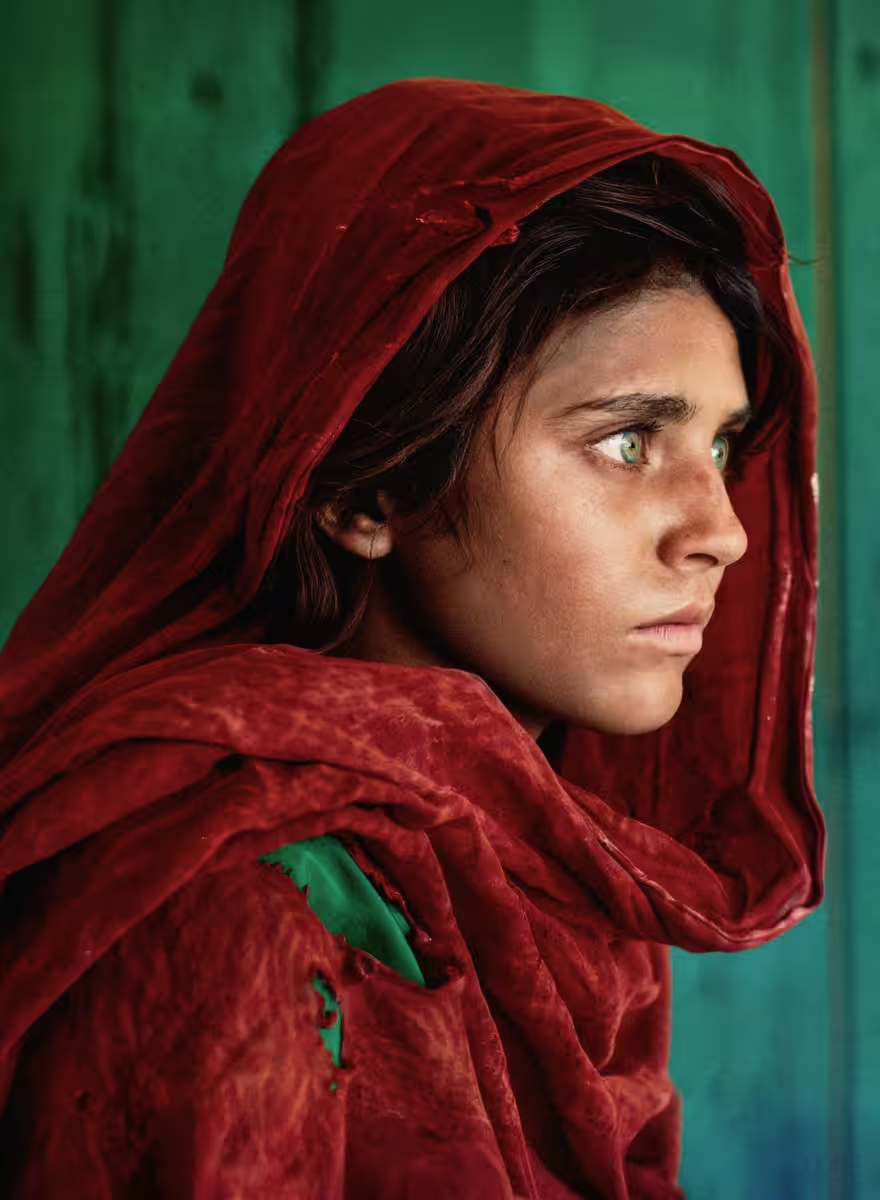
The Second Gaze is the new work from Ganbrood, shown on the following page. It is not a replica. It is a visual echo.
It references one of the most iconic photographs of the twentieth century: the green-eyed girl captured by Steve McCurry in 1984 in a Pakistani refugee camp. That image has come to symbolize both conflict and beauty, the haunting intersection of human suffering and visual myth-making. But it also reveals the power of a photograph to consume and define the person it captures.
Sharbat Gula’s face, shown without her knowledge or permission, became a global icon. According to a 2002 interview, she was angered by its publication. In her Pashtun culture, it is considered highly inappropriate for a young woman to reveal her face publicly, much less be photographed by an outsider. Her identity was subsumed by a story she had no say in telling.
As a former documentarian, I am familiar with these ethical fault lines. Taking a person’s image, especially in situations of vulnerability, can teeter between storytelling and exploitation. The interests at stake are rarely limited to the subject. The photographer and the institutions that circulate the work are also implicated.
My generative reimagining carries its own ethical baggage. This image was not created with a camera, but with a neural network trained on countless photographs, many sourced without the consent of those pictured. The result is a new kind of appropriation. It inherits the complications of the original and adds another layer of complexity.
Read the full text here: https://ganbrood.substack.com/p/the-second-gaze.
—
Edition of 3 (+2 APs) digital C-print, Fujiflex paper, signed on verso, 18 x 13.2 in.
Ganbrood, 2025
This token represents the ownership over the unique, original print, to be claimed by the token holder. Upon resale on the secondary market, the original shall be shipped to the new owner. The receiver of the work will cover shipping costs.