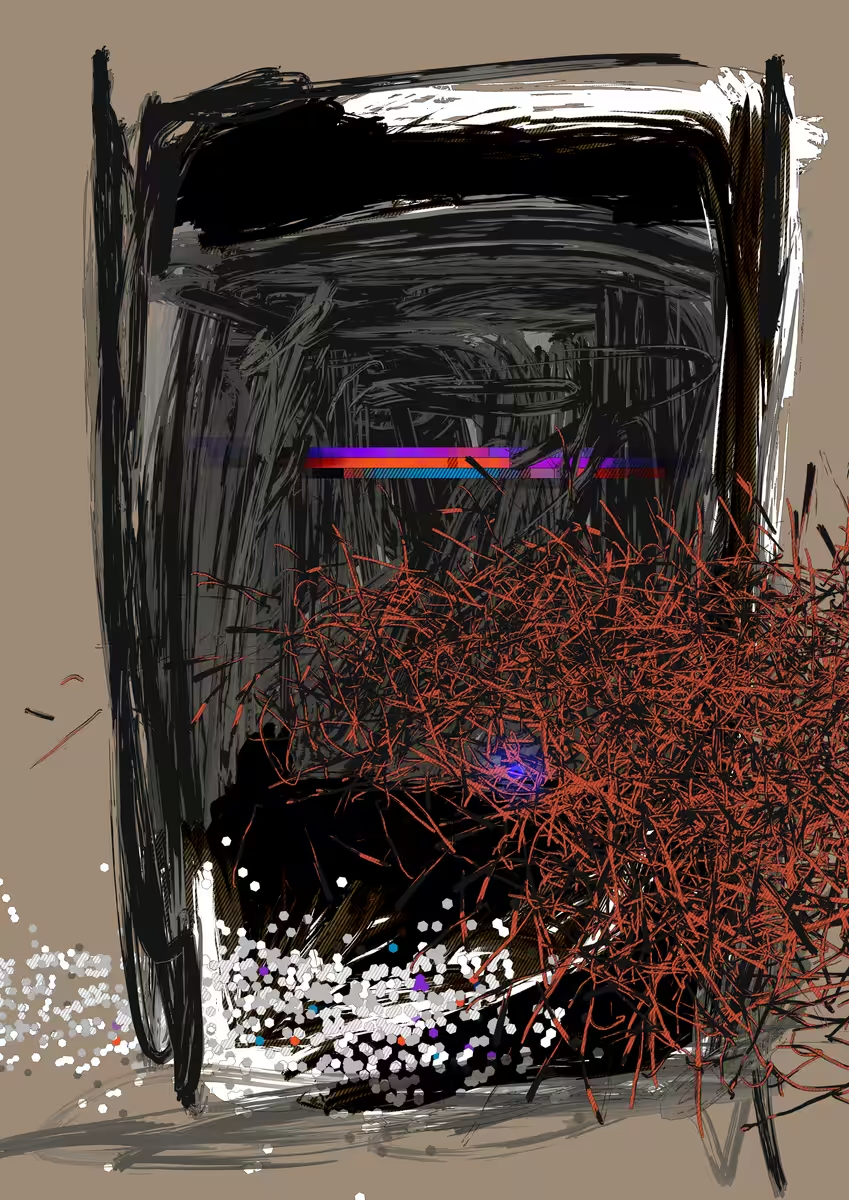
The Last Transmission
From a cognitive perspective, the presence of high contrast, irregular patterns, and sharp juxtapositions can activate the brain’s amygdala, triggering an emotional response before the rational mind can fully process the image. This bypassing of linear cognition suggests that certain arrangements, whether in art or life, engage with more primal and instinctive aspects of human perception. The philosophical question that arises is whether meaning is an inherent property of the world or if it is something we impose upon it. If the mind instinctively constructs significance from disorder, then meaning may be an emergent property of consciousness itself, rather than a fixed attribute of external reality. In this way, the act of perception becomes a creative act, one where the observer is just as responsible for the construction of reality as the perceived object itself. —————— Information:
4121 × 5827 pix • 23.3 MB