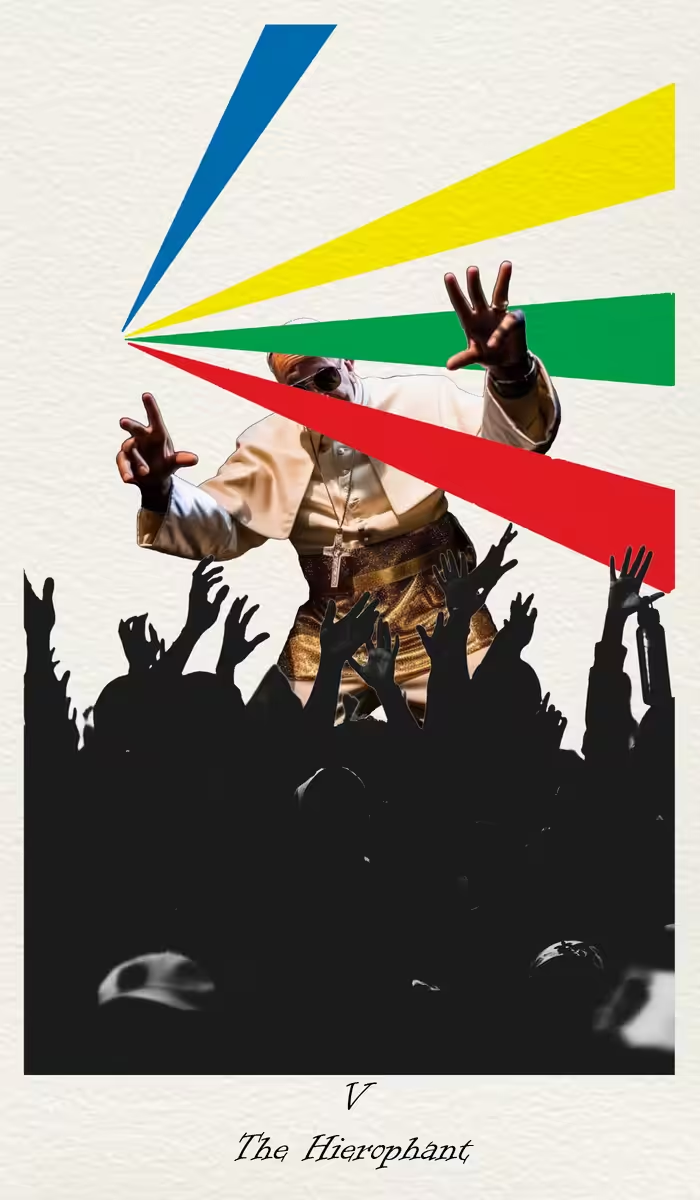
The Hierophant
About the Card
After The Emperor establishes worldly order, The Hierophant establishes spiritual order and tradition. He is the teacher, the interpreter of sacred laws, and the mediator through whom wisdom is passed from previous generations to those who seek it.
In the Marseille tradition, this card directly portrays the Pope and religious authority. In the Rider–Waite–Smith tradition, its meaning extends beyond a religious figure and becomes a symbol of tradition, teaching, and ritual. In the Thoth tradition, under the title The Hierophant, he embodies the transmission of mysteries, sacred traditions, and the connection between humanity and divine truth. You can view the Rider–Waite–Smith depiction of The Hierophant through the link below. https://steve-p.org/cards/pixe/RWSa-T-05_6014.png
There are many elements in the traditional design that deserve attention. Yet perhaps everything can be summarized in the Hierophant’s hand gesture—the hand that embodies blessing and connection with divine truth. The disciples are another significant element of the image. Their posture conveys complete submission, devotion, and unconditional acceptance.
But none of this is something that can truly be preserved in the redesign of a modern card. In this reinterpretation, the Hierophant is not an ethereal figure. There is no blessing or divine truth, and the disciples are not thirsty for truth. Everything belongs to this world and is made of tangible pleasure. Even following is temporary—a passing act driven by momentary excitement and enthusiasm.
About the Collection
Interpreting a collection of Tarot cards created with an emphasis on reinterpretation and conceptual transformation is extremely difficult without an initial understanding of the Tarot tradition and its narrative, psychological, and mystical interpretations.
Among the many Tarot traditions, at least three systems of visual representation deserve special attention: the Marseille Tarot, the Thoth Tarot, and the Rider–Waite–Smith Tarot. While the Marseille tradition is more focused on social and symbolic aspects, the Thoth tradition is deeply connected with mysticism and Kabbalah, and the Rider–Waite–Smith tradition places greater emphasis on narrative symbolism. Despite their differences, all three traditions represent the underlying conceptual system of Tarot, which has remained largely intact throughout history.
The imagery of these traditions is highly maximalist, filled with colors, symbols, and visual details. This collection follows a different approach. By limiting visual elements and adopting a minimalist design, each component is given the opportunity to become a point of focus, encouraging self-reflection and introspection.
The conceptual framework of these designs has been significantly transformed and is based on my personal understanding and perception of the world. Since directly explaining the meaning of each card can reduce the viewer’s role in discovering and interpreting the artwork, I have chosen to provide only a brief description of the traditional visual elements of each card and their meanings, along with references to the aspects that have been transformed within this collection.
To acquire the complete collection at once instead of purchasing the cards individually, you can purchase the available ticket. By purchasing this ticket, all 22 cards of the collection will be transferred to the collector’s wallet.
Ticket Link: https://teia.art/objkt/884010