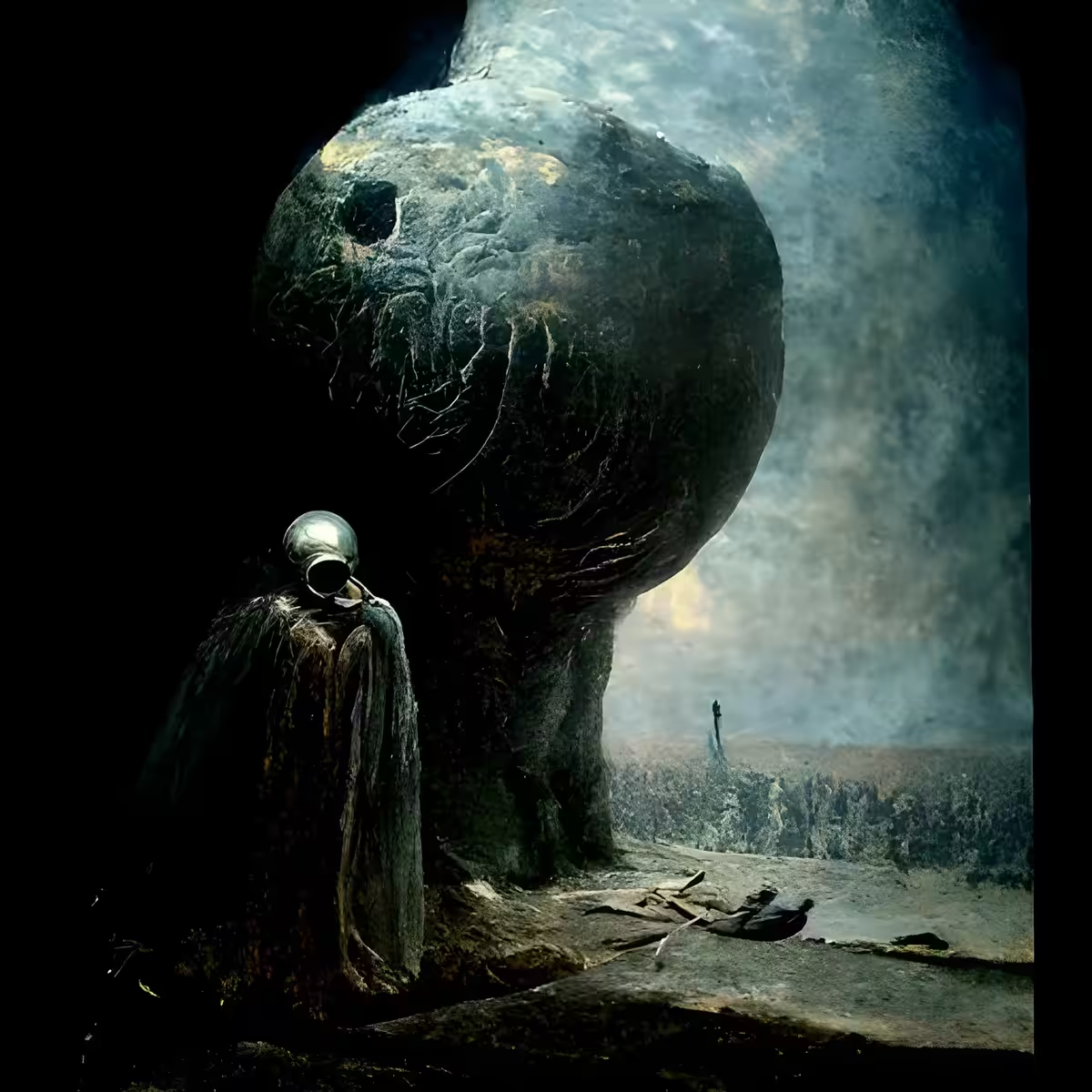
The Giant
Giant, in folklore, huge mythical being, usually humanlike in form. The term derives (through Latin) from the Giants (Gigantes) of Greek mythology, who were monstrous, savage creatures often depicted with men’s bodies terminating in serpentine legs. According to the Greek poet Hesiod, they were sons of Ge (“Earth”) and Uranus (“Heaven”). The Gigantomachy was a desperate struggle between the Giants and the Olympians. The gods finally prevailed through the aid of Heracles the archer, and the Giants were slain. Many of them were believed to lie buried under mountains and to indicate their presence by volcanic fires and earthquakes. The Gigantomachy became a popular artistic theme (found, for example, on the frieze adorning the great altar at Pergamum), and it was interpreted as a symbol of the triumph of Hellenism over barbarism, of good over evil.