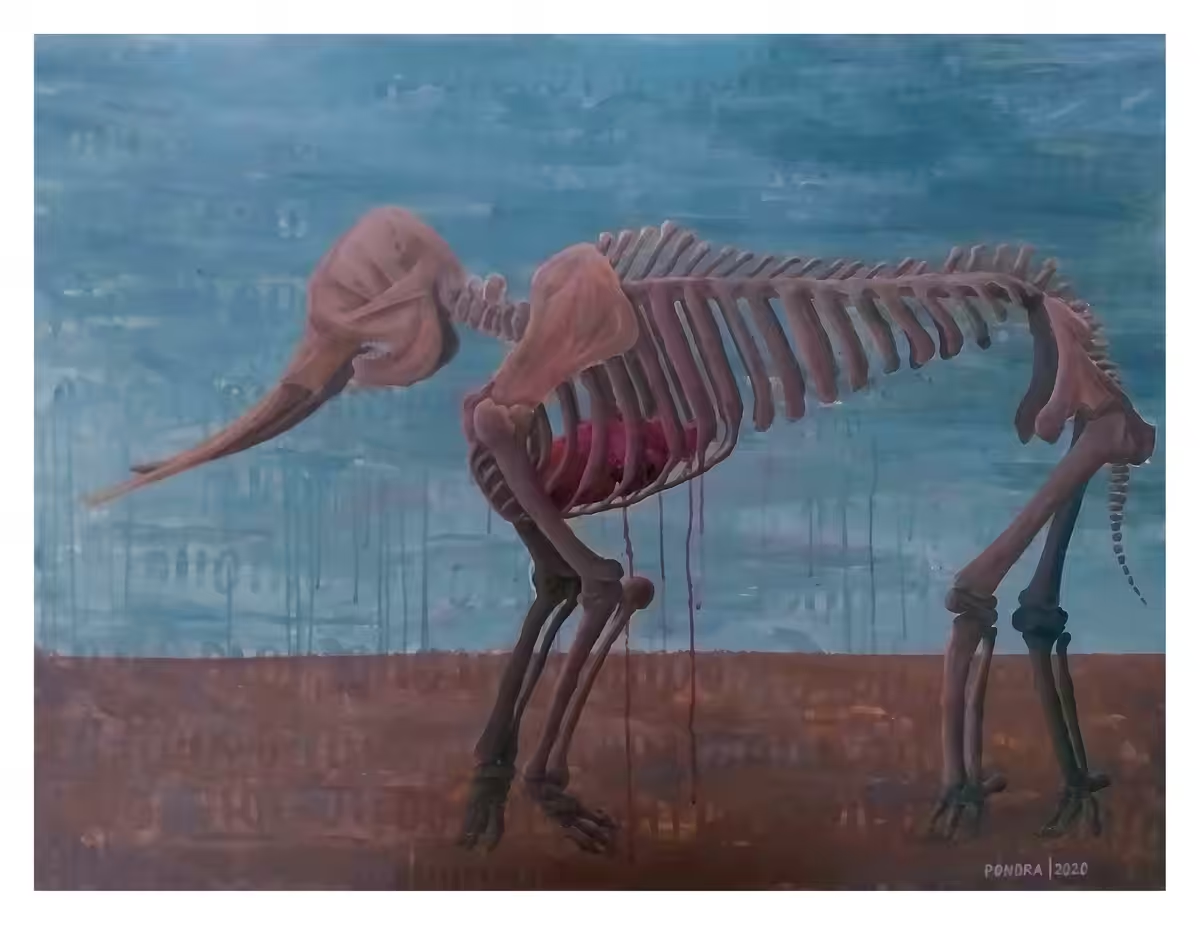
The Frail Brown
This work personally tells the story of my uncle who has finished his struggle against liver tumor. My uncle as a tough and hardworking person must find a better way there. The depiction of an elephant in the image area becomes a metaphor for the toughness, hardworking, loyal and loving friends of his figure. The elephant is depicted only with its bones, which symbolizes death. The stature of the elephant's bones resembles the texture of wood, indicating that no matter how strong living substances are, they will also be brittle and decomposed by the soil. Inside the bones there was a liver organ with bleeding blood indicating that the organ was sick or injured. The blue melting on the background symbolizes sadness for the family and or loved ones left behind. People who hope that someday he will get a good place there.
The work above can be an example of where—however—a living being will inevitably die. Death for some people is interpreted as the culmination of all kinds of pain in the world. In Jean-Paul Sartre's philosophy, death is understood as the culmination of nothingness. Previously, philosopher Martin Heidegger had called for "all my being leads me away into nothingness". "What is death?" asked Sartre. Death is total non-existence. Death is as absurd as birth is absurd. Death is the ultimate (the most luxurious final condition), the most authentic condition for human life, because it can embrace the eternal consciousness. Death is another proof of the absurdity of human existence. Humans with their respective vehicles of death can embrace the One that has been longed for.