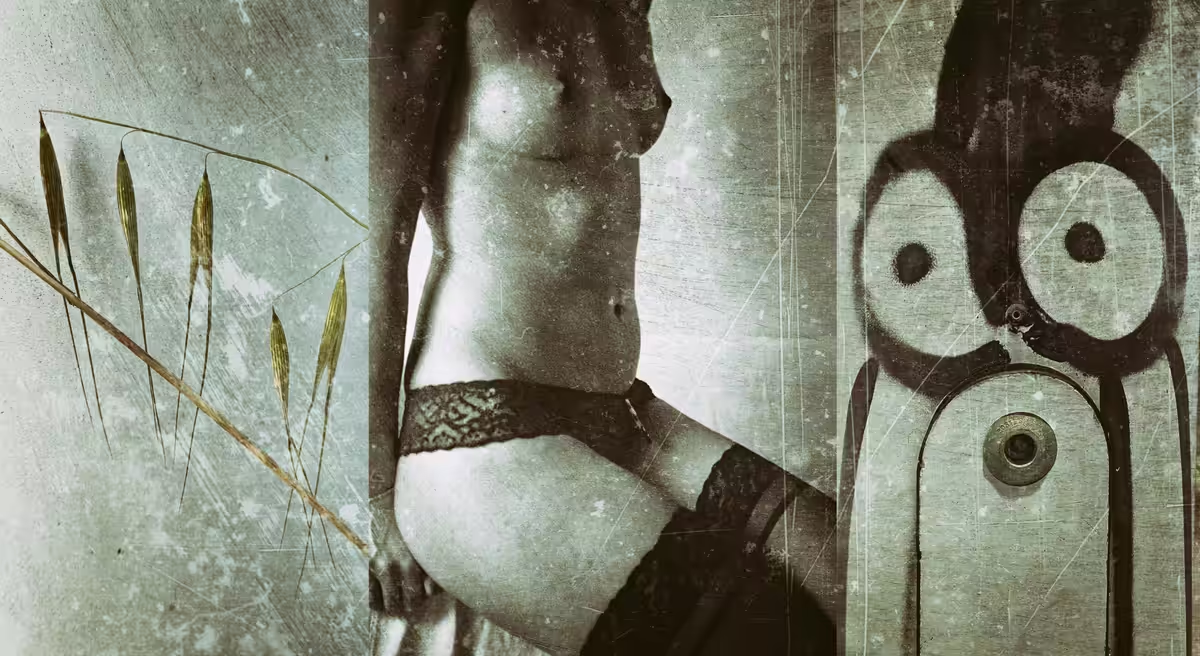
In Fragmented Beauty, the viewer is confronted with three realities that dialogue in tension and harmony: nature, the body, and the machine. Each panel represents a distinct dimension of aesthetic perception, addressing fragility, desire, and the gaze in a single visual narrative divided into three acts. On the left, a light branch with spikes suspended in the void suggests the organic and ephemeral beauty of the natural world. The center reveals the sensual, faceless female figure, a symbol of a body reduced to form and desire, but also of a dissolved identity. On the right, an ambiguous, almost totemic figure with exaggerated eyes and a central orifice represents the cold and disturbing presence of the gaze—a possible metaphor for control, surveillance, or dehumanization. With an aged texture enveloping the entire composition, the triptych speaks not only of what we see, but how we see it. Fragmenting beauty does not destroy it; it reveals it. And in this process of multiple observations, the work invites us to reflect on what we define as beautiful, and what we leave out of the frame.