Second Faces
Pulp Stories. Fight night happens on the empty lot behind the market, every second Saturday, under one hanging bulb and all the stars. The whole village walks over after dinner — farmers with folding chairs, grandmothers with thermoses, kids on the low rooftops, the bookmaker working out of a biscuit tin. The bell is an old oxygen tank. The referee is the schoolteacher. Nobody checks his calls.
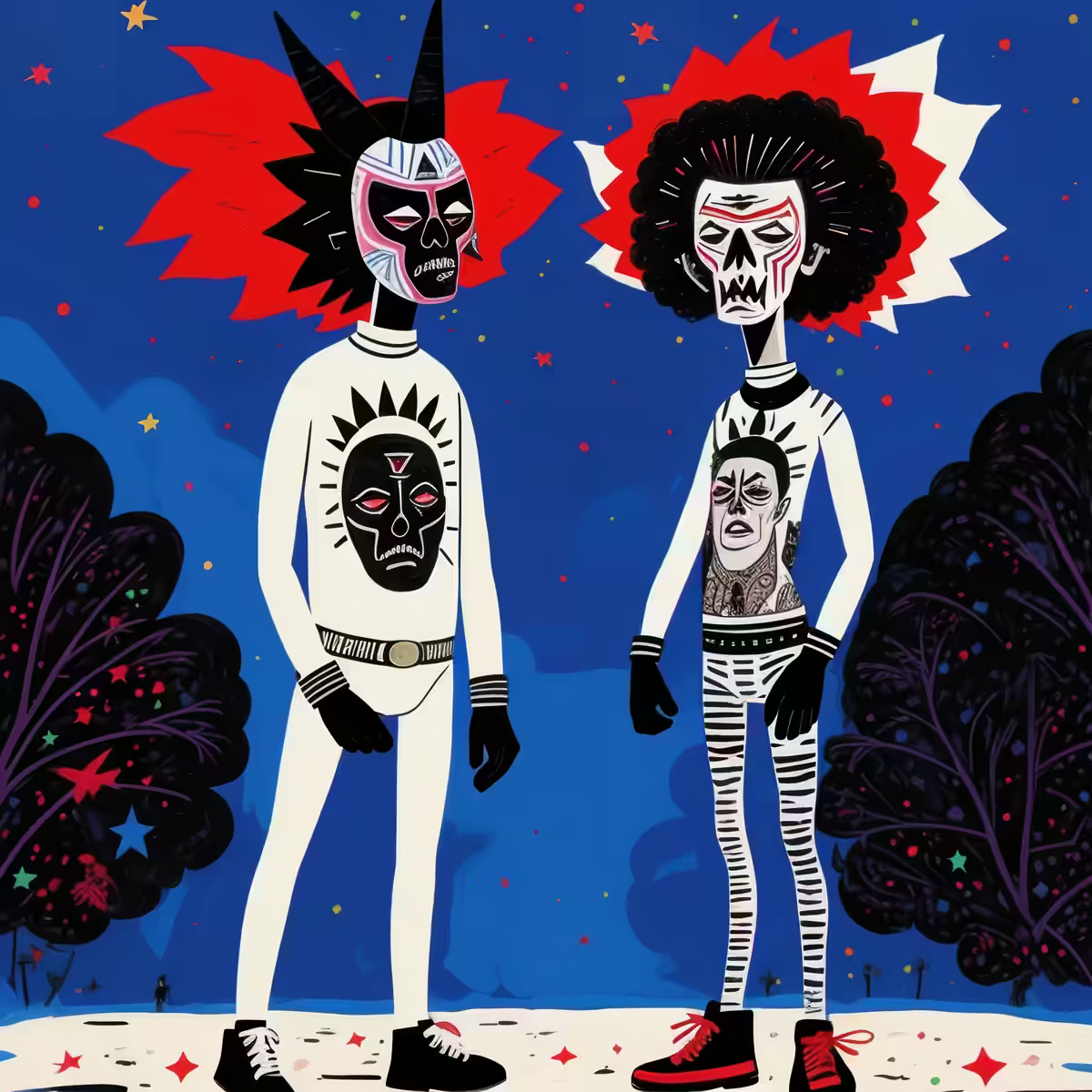
The tag team arrived two winters ago and hasn't lost since. They come out last, side by side, saying nothing.
The one in white was the tailor's apprentice — until the suit finished that. White canvas, tight as skin, and after every victory he sews his beaten opponent's face onto it somewhere new. Forty-one faces now. The villagers read the suit like a ledger: there is the butcher's cousin, there the loud kid from the bus depot, there the referee's own nephew, sewn face-down, which everyone agrees was a statement.
The painted one came from outside — nobody knows from where. He has never worn a mask; he paints the skull on fresh before every fight, and under it, across his chest, the other faces are inked instead of sewn. His are the faces of people who owed him, he says. He has never said what they owed.
The rules of the lot are simple: last one standing rings the tank, and the losing face belongs to the winner — by stitch or by ink. That is why the two of them are still unbeaten. Nobody in the crowd can tell where one ends and the other begins, and by the third round neither can the referee, and by the fifth, most nights, neither can they. The village calls them brothers. The village likes it that way. The bookmaker pays out anyway."