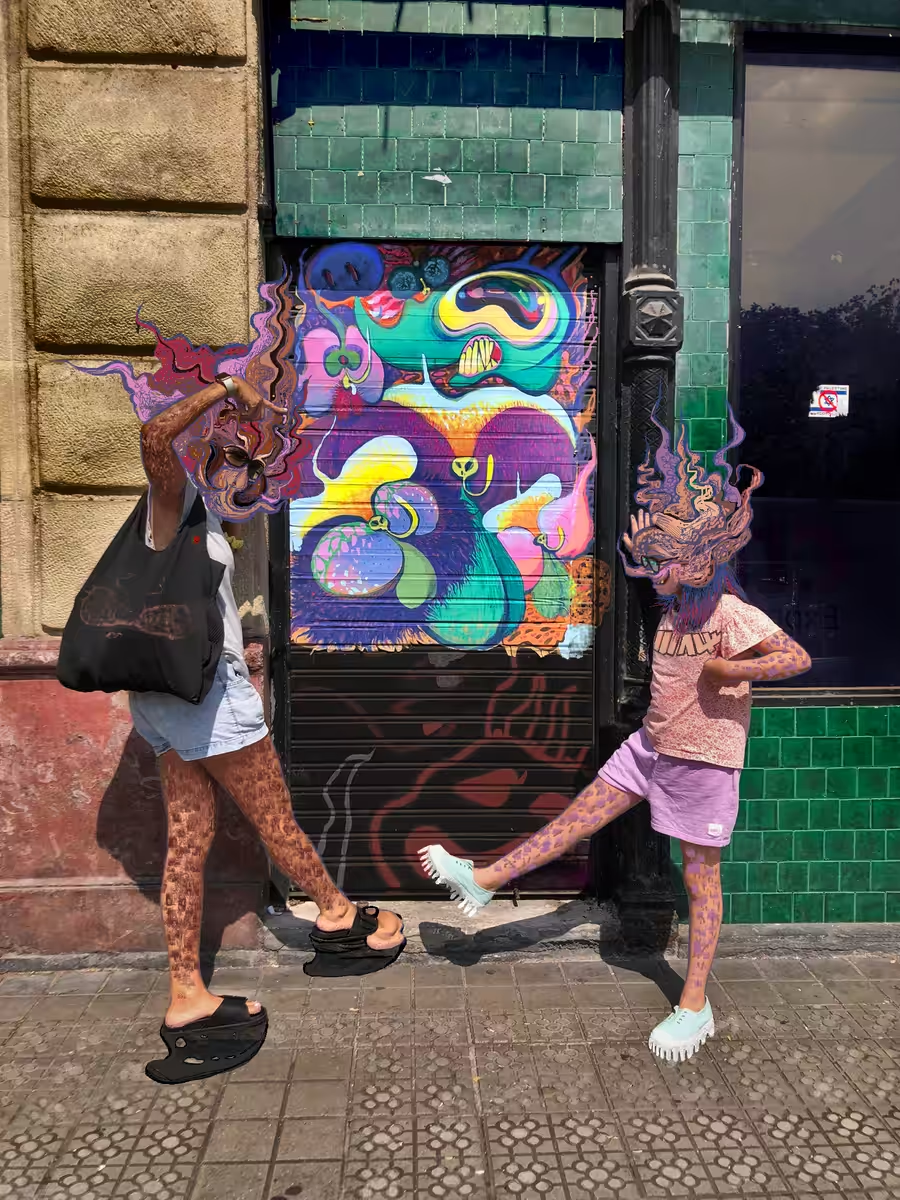
Powers
In a world of steel and algorithms where identity is a number, Lia and Kitza kept the invisible fire burning. They carried no weapons, only memories.
While the system demanded uniformity of thought and disconnection from the past in favor of productivity, they practiced the ritual of the original tribe: every night, in the silence of their kitchen, Elena told Sira stories of their ancestors that were not recorded in digital archives.
Their resistance was veiled: before the surveillance cameras, they complied with the hegemonic protocol; but in the glint of their eyes when they met, insurrection pulsed. For Lia, protecting her daughter's conscience was not just an act of parenting, but the preservation of the first civilization. They knew that as long as a mother remembered and a daughter listened, the system would never have absolute control over reality; the family remained the only territory that power could not colonize.
Do you want us to explore a key dialogue between them where that ancient secret is revealed, or would you prefer to describe the act of rebellion that tests their bond?
Bad Sojas 10