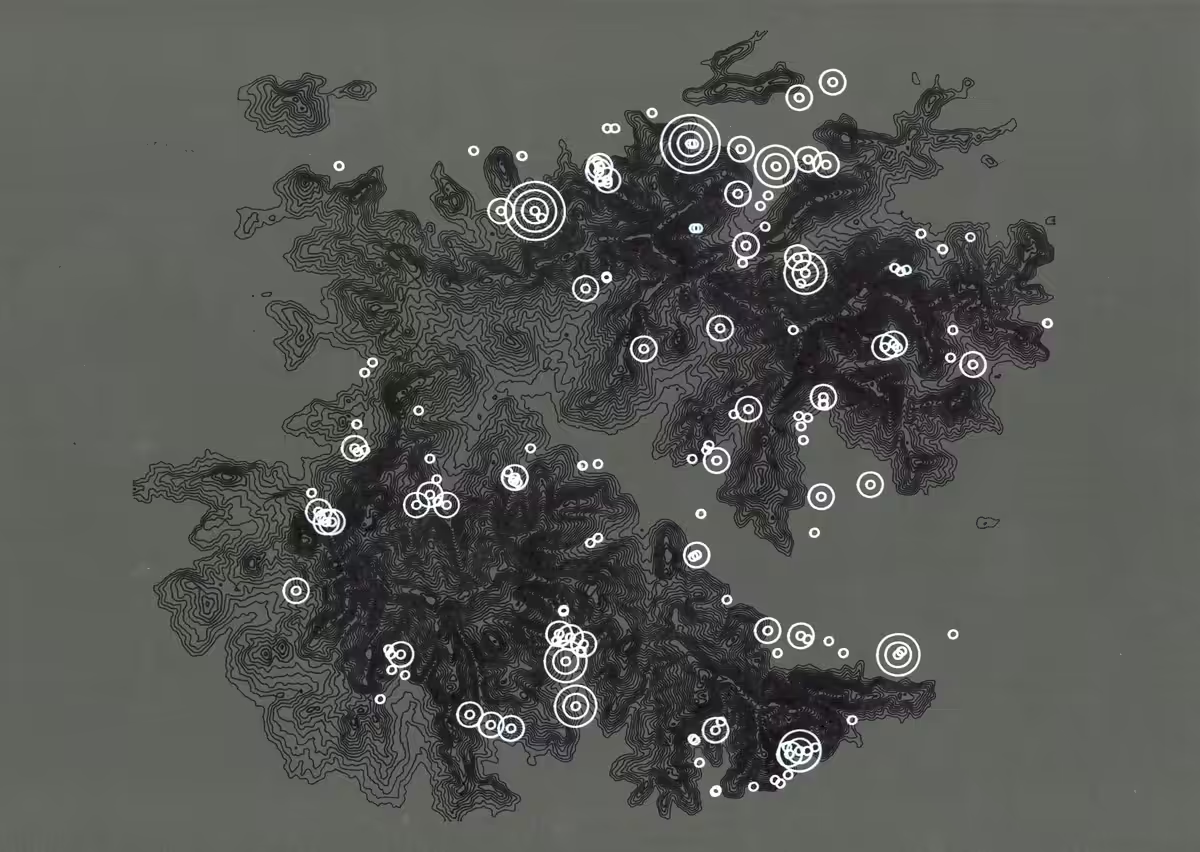
Plutonium Mountain
Degelen (aka Plutonium) mountain is a compact 12x12 km granite massif, rising to 1084m in the heart of the ex-USSR's Semipalatinsk Test Site (STS) in eastern Kazakhstan. From 1961 to 1989, some 215 underground nuclear tests were conducted here. Although intended to limit atmospheric fallout and avoid detection, many detonations produced significant radiation releases and subsurface radionuclide migration.
Local rural and Indigenous communities were exposed both during earlier STS atmospheric testing and later to residual contamination; epidemiological studies report elevated rates of cancer, cardiovascular disease, and congenital disorders in affected villages. After the fall of the USSR in 1991, security collapsed and the infrastructure was essentially open. Scavengers entered test tunnels seeking scrap metals with access to the unique ingredients of weapons-grade plutonium, of which 100-200 kg remained within the tunnel complex, enough for at least a dozen bombs.
Between 1996 and 2012 Kazakhstan, Russia and the United States conducted a cover-up program (bit.ly/4h4E5nH) to secure Degelen and prevent immediate access to the plutonium. Portals were collapsed or backfilled with rock and concrete, contaminated equipment was crushed and buried, and residues were immobilised in place. With Pu-239’s half-life of 24,000 years, the entombed material is a potentially catastrophic multi-millennial environmental and security legacy.
Digitised pen plot of computationally-altered Degelen Mountain massif topographic contours (640-1100m), with overlay of 215 nuclear test sites.
Special edition for Teia's Unique Ingredients / Art on Tezos: Berlin project.