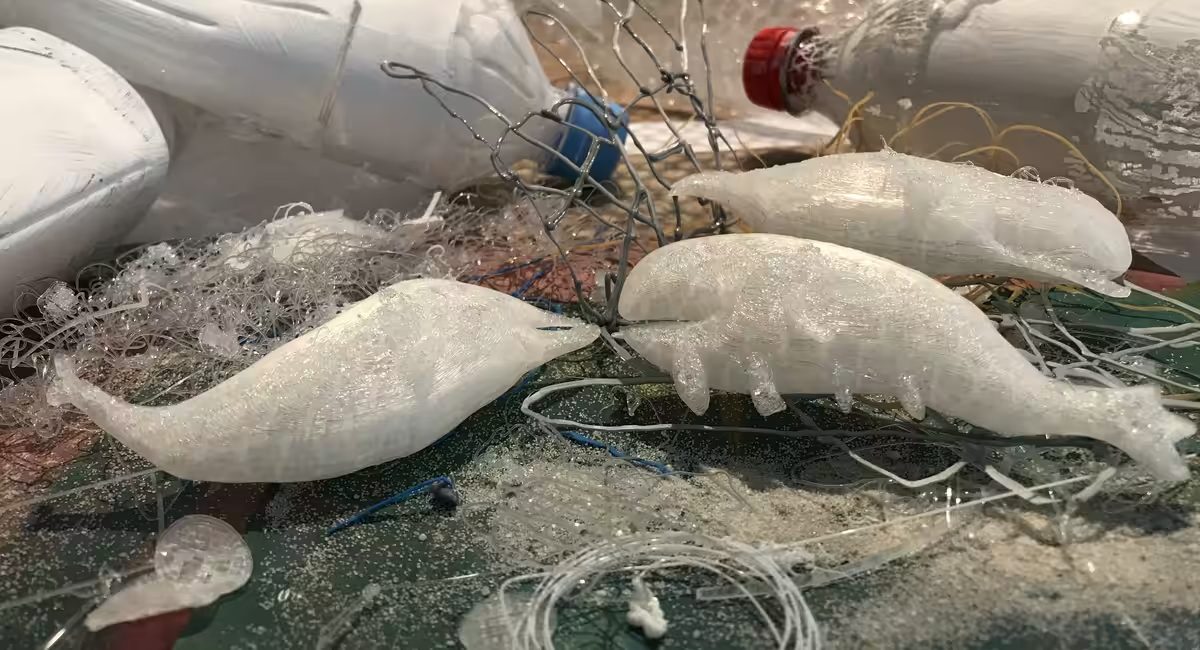
plastisphere whale
Plastic debris garbage patches have formed new ecosystems and environments called plastispheres in oceans around the world. The plastic in these rafts has leached into the sea and microplastics have been ingested and has poisoned species such as the whale, amongst others. The high levels of phthalates in the plastic has led to species becoming feminised, as their oestrogen levels have risen dramatically. Whales have evolved to be more aggressive whilst protecting their young – initially this was discovered when whales began attacking boats in 2023. In the future, in an epigenetic response to this disturbing environment, plastic has fused with the whale’s flesh, forever changing its genetic makeup, leading to some variations to grow legs to enable them to move around the surface of the plastisphere.
This artwork examines the possibilities of speculative evolution: in the future, based on the effects of selected species living in the polluted environment of the Great Pacific Garbage Patch. New forms of the species were imagined, as well as explorations in materiality, via hand drawn drawings on paper and digital as well as computer based digital 3D scanning, 3D modelling and 3D printing, to reflect humanity and our modern life's negative effect on the ocean habitat and species.
Plastisphere Whale Diorama PLA plastic 3D printed whale models (11cm x 3 cm), sand, hand printed paper, scrap PLA plastic filament, plastic bottles, plastic bag, plastic bubble wrap
July 2023
published for the 2023 #opentez event