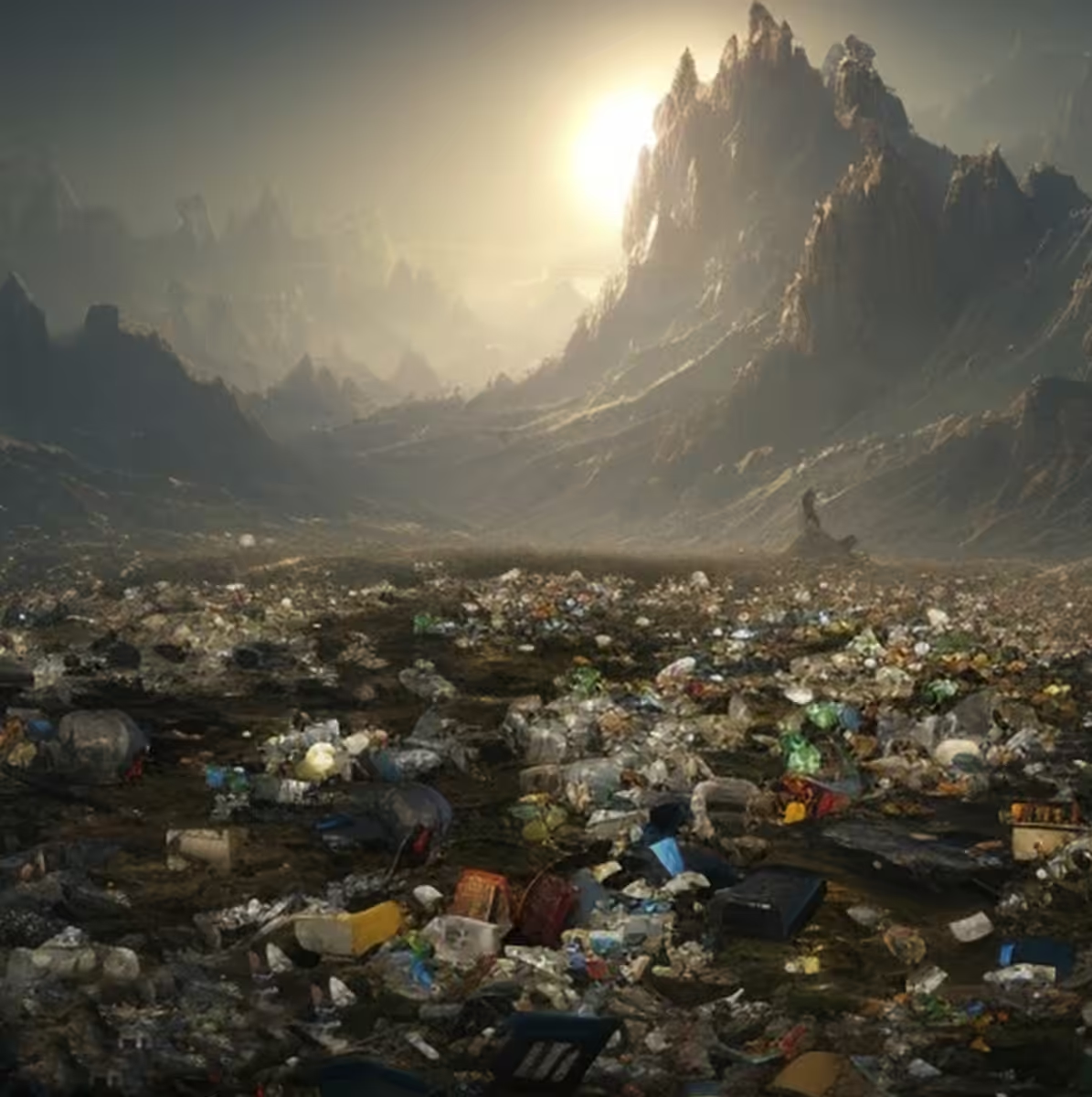
Old Landfill
Long ago, before air poisoning and environmental degradation, there was a landfill located on a vast expanse of land. This area was designated to receive the waste and debris generated by society, ensuring proper waste management and safe disposal.
The landfill was an organized site with different sections for sorting the discarded materials. Mountains of trash rose up, comprising a mixture of objects, from food scraps and plastic packaging to furniture and obsolete electronic devices. However, despite the chaotic appearance, there was an attempt to create order and control within the area.
Layers of earth and organic materials were used to cover and compact the waste, minimizing odors and preventing the proliferation of pests. Large refuse collection vehicles arrived regularly, dumping their loads in the designated areas while a team of dedicated workers took care of spreading and compacting the materials.
Despite being a place for waste disposal, the landfill was also a source of opportunity. Some local residents found a livelihood by sifting through the piles of garbage in search of items that could be reused, recycled, or sold. This created a kind of informal economy and promoted the idea of recycling and reuse.
The scenery around the landfill was a stunning natural landscape with distant mountains and a clear sky. As time passed, nature continued to thrive around the site, revealing a beauty contrasting with human activity.
However, as the population grew and consumer habits intensified, the landfill also increased in size and volume of waste. Environmental concerns began to arise as it was realized that improper disposal was beginning to have negative impacts on air quality, groundwater, and the health of neighboring communities.