Navigating the Inferno
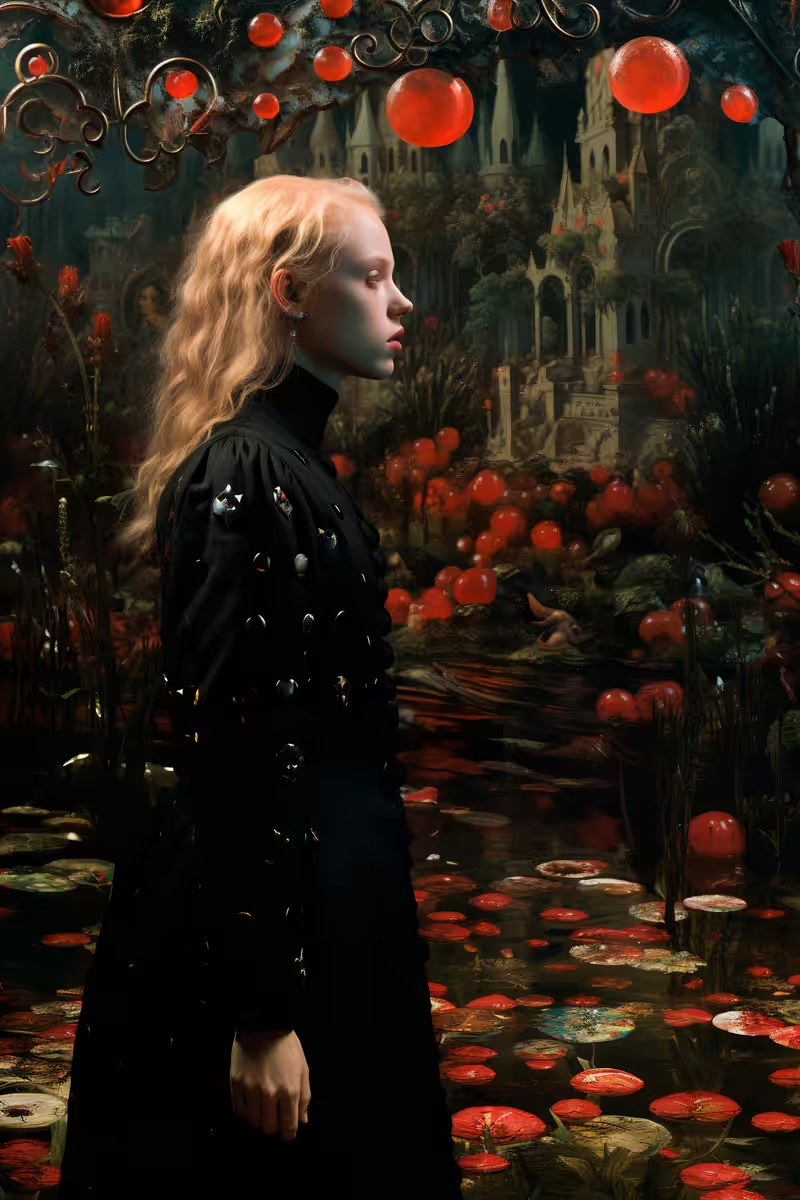
In this image, we encounter a young woman with a lost gaze, standing alone in a strange and dark place, where we can see allusions to the paradisiacal apple. The young woman is surrounded by water lilies in an enigmatic aquatic environment. This composition explores profound symbolism, intertwining key elements of the "Seems" series, where we must look beyond appearances.
The expression of the young woman reflects the existential journey of questioning her place in this mysterious world. The dark and unfamiliar setting represents the enigma of existence and the profound uncertainty of life's path. As she stands in the water, surrounded by water lilies, the symbolism of these flowers takes on meaning. In this context, water lilies might symbolize the delicate balance between life and death, reminding the viewer of the fleeting nature of existence. Their presence in the dark watery landscape alludes to the connection between the transience of life. As the young woman navigates this ambiguous environment, her solitude becomes an emblem of the human condition, reflecting our individual quests for meaning and understanding.
The allusion to the paradisiacal apple adds layers of symbolism. The apple, often represented as the forbidden fruit in the Garden of Eden, symbolizes human curiosity and the quest for knowledge, hence the presence of apples reminds us of the complexities of human existence, where choices have consequences and journeys can be both alluring and treacherous, directly relating to the life of the young woman depicted, a life where her choices are always marked by her gender.
As part of the "Seems" series, this powerful image invites viewers to reflect on the inherent human desires for understanding, meaning, and connection. The dark and enigmatic setting, along with water lilies and apples, among other items, speak of the relentless search for meaning in an existence that often seems both beautiful and threatening.