#monotez
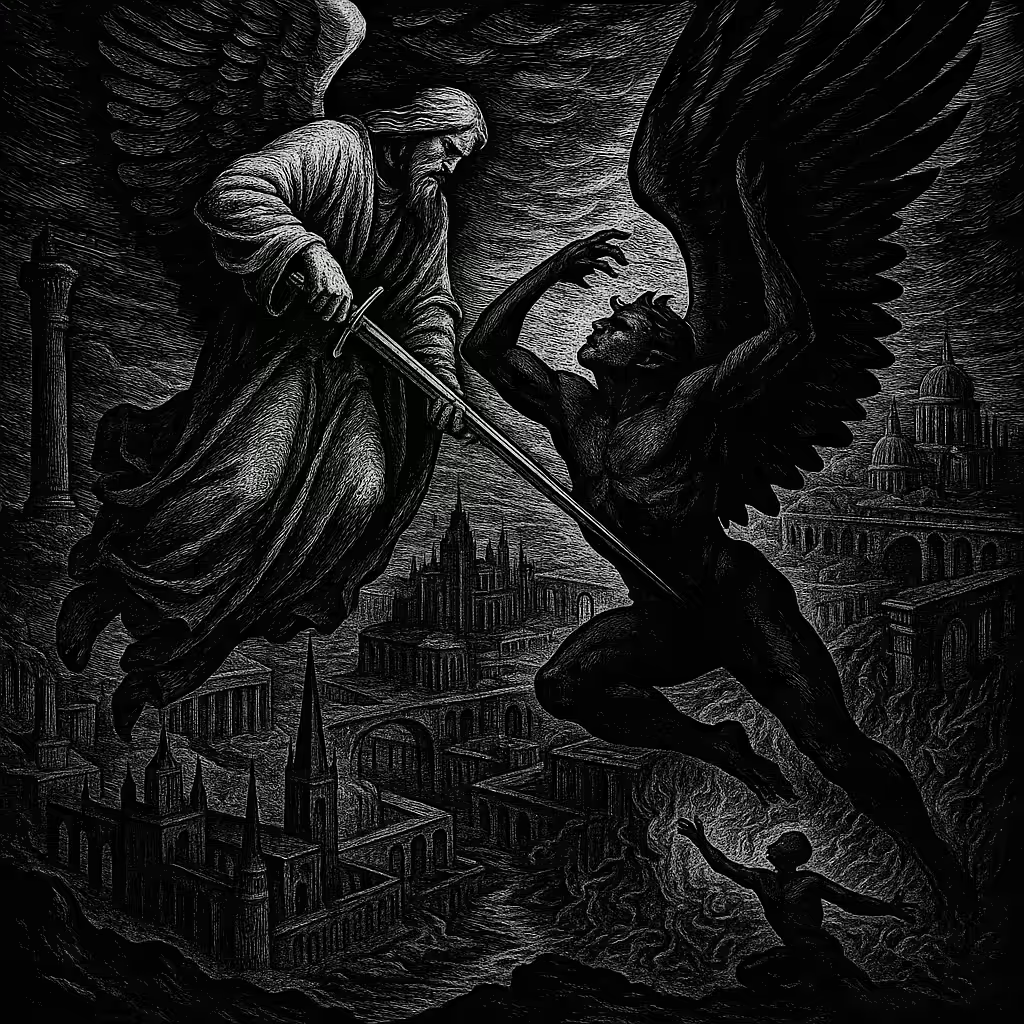
Between Light and Shadow: The Primordial Conflict of the Human Soul
Since the dawn of humanity, the idea of a struggle between opposing forces has been a constant symbolic and spiritual theme: “good and evil.” In antiquity, it was expressed as order and chaos in Mesopotamia, light and darkness in Egypt, and Maat versus Isfet as balance versus destruction. In Zoroastrianism, it took a dualistic form as Ahura Mazda versus Angra Mainyu. In the Judeo-Christian tradition, it manifested as God versus Satan, angels versus demons, while in Islam, it appears as the struggle between submission to God and the temptation of Iblis. In the East, conflict is understood less as war and more as balance, represented by yin and yang in Taoism, or as the tension between ignorance and enlightenment in Buddhism. In modern philosophy and psychology, this struggle is reinterpreted as the confrontation between reason and instinct, conscience and shadow, showing that, beyond the names, the conflict symbolizes the human search for meaning, ethics, and transcendence.