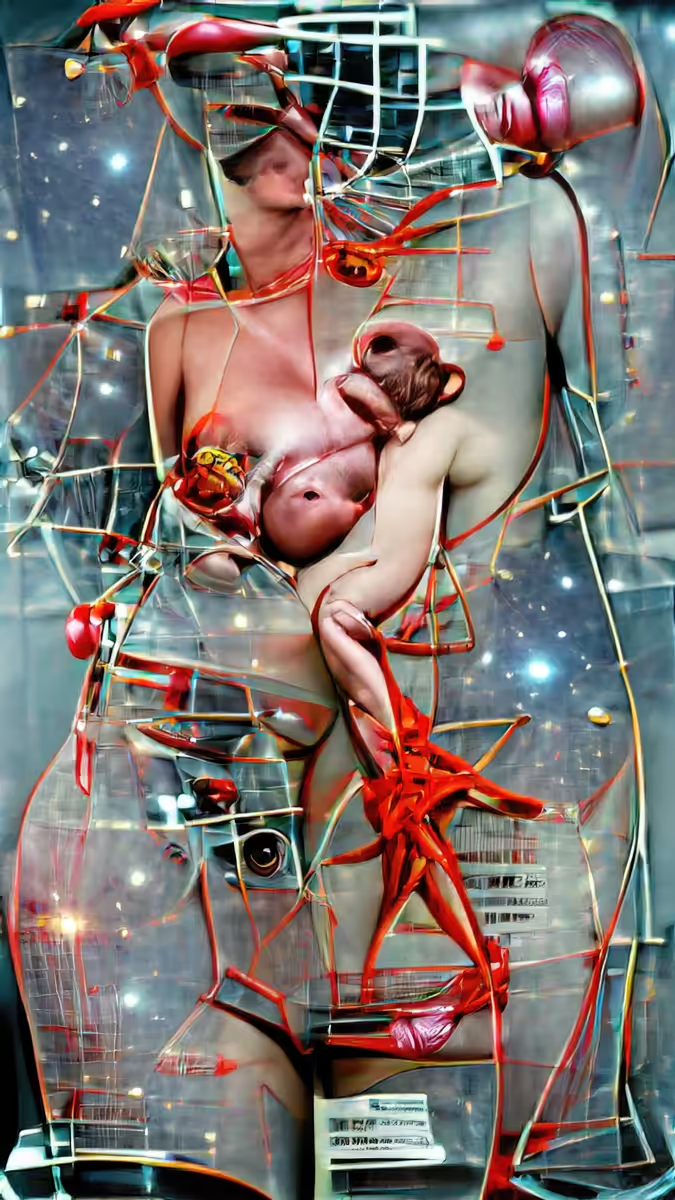
Madonna
"Madonna" is a series of works generated by Pixray after "Genesis".
During the Renaissance, the saints in the artworks were different from the previous emphasis on divinity, and were more humanized. For example, “Madonna” highlights the humane manifestations of tenderness and kindness. The wealthy citizens even use them to decorate private spaces, and artworks no longer serve religion purposes only. Among them, “Madonna,” made by Raphael, particularly conveys this idea even more so.
In short, I tried to extend the study of space and humanity from “Madonna.”
Thanks to sites such as Pixray, the threshold for image generation has been greatly reduced. With the NFT market riseing, Generative art has ushered in an unprecedented grand occasion. The most important thing is that in the meta-universe vision depicted on the basis of blockchain, works of art may be completely independent of the physical real world. So in the new real world of web3.0, which aspect of "humanity" is the most representative?
The desire, perhaps.
There are nine pieces in the series: “Madonna of Currency”, “Madonna of Artcrafts”, “Madonna of Gold”, “Madonna of Force”, “Madonna of Regime”, “Madonna of Technology”, “Madonna of Charm”, “Madonna of Breeding”, “Madonna of Libido”.
8% of the proceeds from the sale will be used to support the operation of the Pixray. https://pixray.gob.io/genesis/
《Madonna》是繼《Genesis》後使用Pixray生成的的系列作品。
文藝復興時期,藝術作品中的聖人有別於過往強調神性,更多被賦予人性化的表現。《聖母像》為例,它突出溫柔慈愛等富有人味的表現。另一方面,富有的市民階層更用它們來裝飾私有空間,藝術作品走出宗教場域,不再僅為了服務宗教。其中,拉裴製的《聖母像》尤具代表性。
簡言之,我試圖從《聖母像》延伸談論空間與人性。
歸功於Pixray這類網站,大幅降低圖像生成門檻;隨著NFT市場興起,生成藝術迎來前所未見的盛況。最重要的是,以區塊鏈為基石所描繪的元宇宙願景中,藝術作品可能完全獨立於物理現實世界之外。那麼在web3.0的新現實空間中,哪個面向的「人性」最具代表性呢?
或許是慾望。
系列作品共九件: 《Madonna of Currency》、《Madonna of Artcrafts》、《Madonna of Gold》、《Madonna of Force》、《Madonna of Regime》、《Madonna of Technology》、《Madonna of Charm》、《Madonna of Breeding》、《Madonna of Libido》。
作品銷售收益的8% 將用以支持Pixray網站運作。 https://pixray.gob.io/genesis/