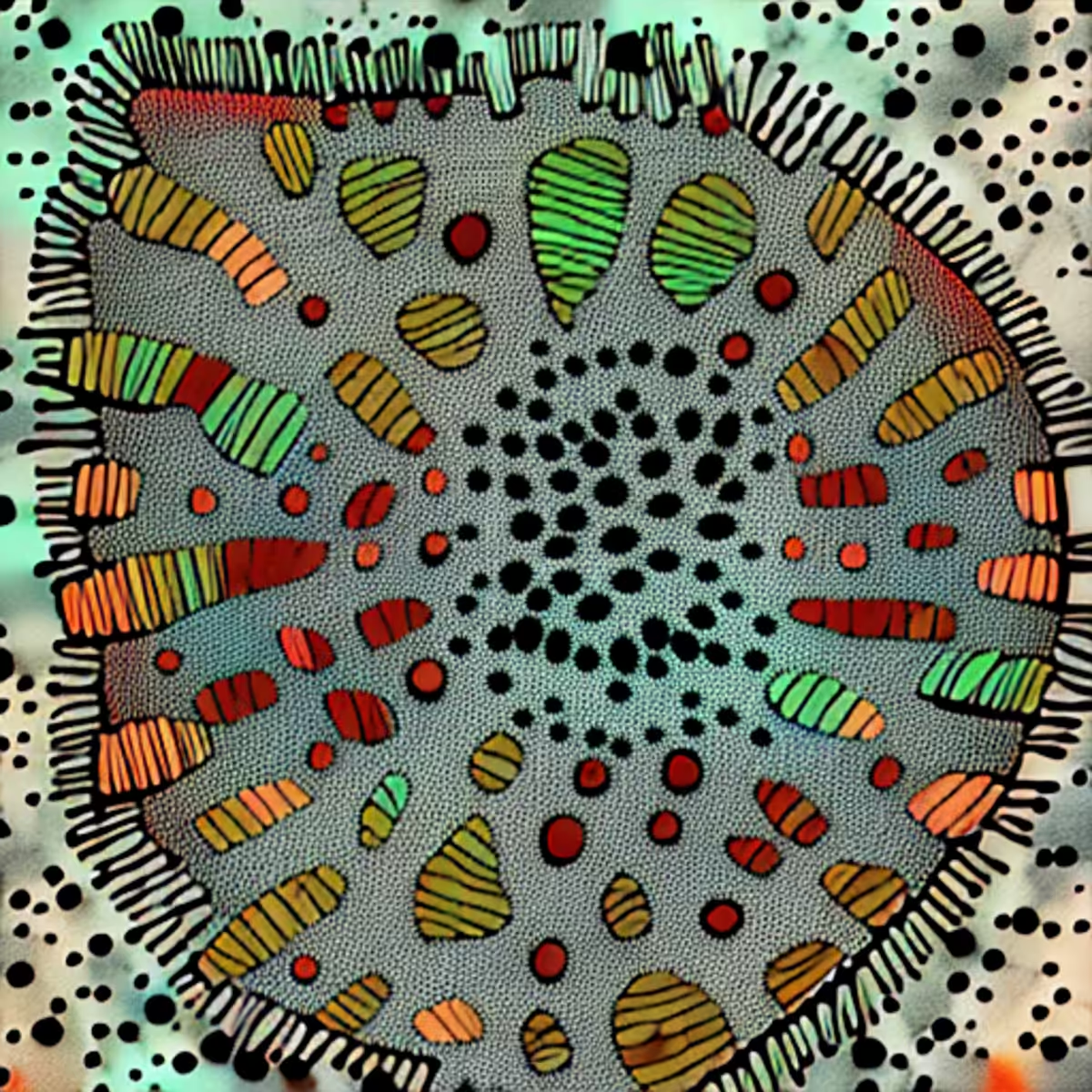
LUCA
“Last Universal Common Ancestor”
LUCA, most recent form from which all surviving life on Earth descended.
LUCA probably lived in high-temperature water of deep sea vents near ocean-floor magma flows around 4 billion years ago.
Charles Darwin’s book On the Origin of Species in 1859:
"Therefore I should infer from analogy that probably all the organic beings which have ever lived on this earth have descended from some one primordial form, into which life was first breathed."
"There is grandeur in this view of life, with its several powers, having been originally breathed into a few forms or into one ..."
While the gross anatomy of LUCA can only be reconstructed with much uncertainty, its biochemical mechanisms can be described in some detail, based on "universal" properties currently shared by all independently living organisms on Earth.
The LUCA was likely capable of sexual interaction in the sense that adaptive gene functions were present that promoted transfer of DNA between individuals of the population to facilitate genetic recombination.
In 2000, estimates of LUCA's age ranged from 3.5 to 3.8 billion years ago in Paleoarchean, a few hundred million years before the earliest fossil evidence of life, for which candidates range in age from 3.48 to 4.28 billion years ago.
This placed the LUCA shortly after the Late Heavy Asteroid Bombardment which was thought to have repeatedly sterilized Earth's surface.
However, 2018 study from University of Bristol, applying a molecular clock model, found that data (102 species, 29 common protein-coding genes, mostly ribosomal) compatible only with LUCA as early as within 0.05 billion years of maximum possible age given by Earth-sterilizing Moon-forming event about 4.5 billion years ago.
"Of course, LUCA was not living alone at that time (as the African Eve herself) but among many other organisms that have no descendants today."
While test overwhelmingly favored existence of single LUCA, this does not imply that LUCA was ever alone: Instead, it was only cell whose descendants survived beyond Paleoarchean, outcompeting all others.
Instead, by the time LUCA lived, RNA viruses had probably already been out-competed by DNA viruses.