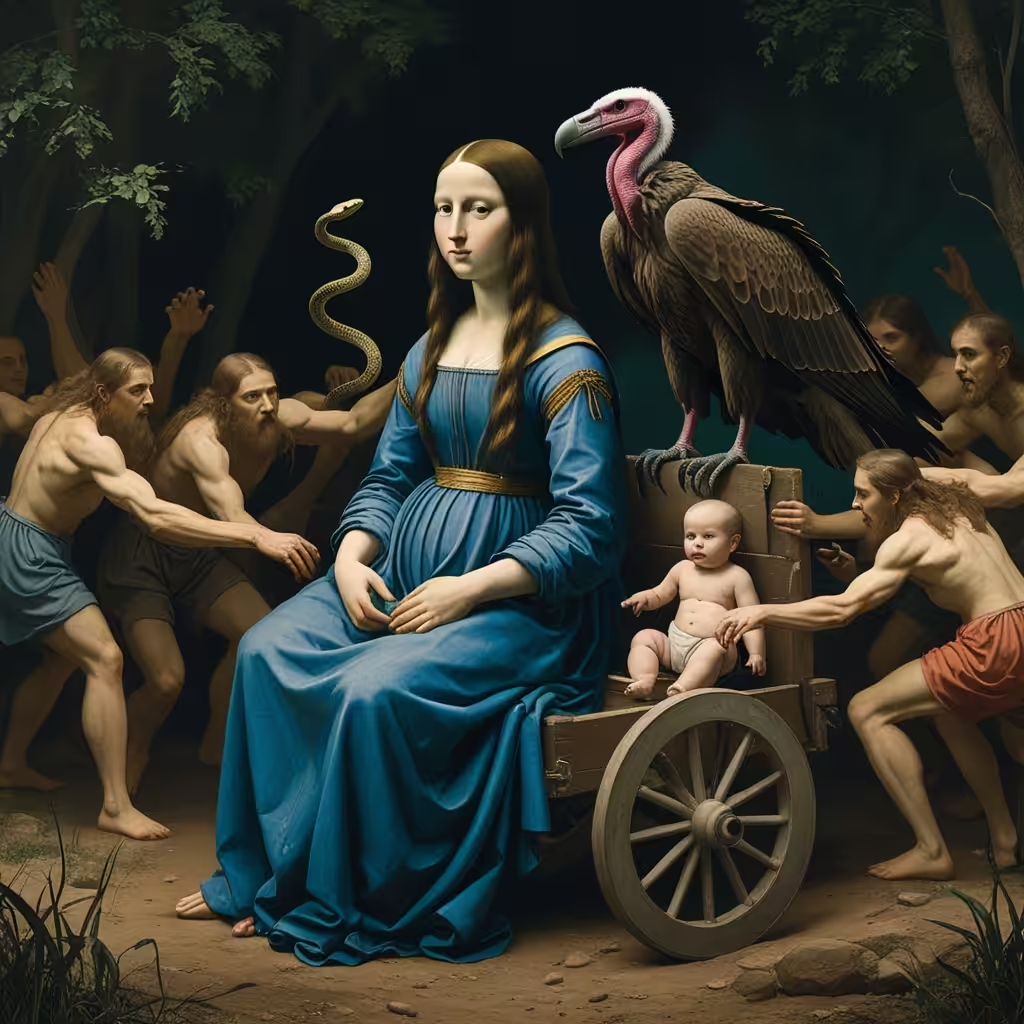
🦉owlhead 🦉 | In modern and contemporary art, instead of using the term "tamed," we prefer a more polite phrase: decorative art—a dimension of art equivalent to vanilla and uninspired works, art that relinquishes its progressive dimensions to increase its chances of commercial success.
Ali Malek, whatever he may be, rests upon a treasure of ugliness. His art resembles the handmade crafts of life-sentenced prisoners, the creations of patients released from mental institutions, or the aesthetics of slum dwellers. In this sense, it is closer to raw and brut art than to the familiar clichés of elite art.
François Rouan recounts that after visiting Auschwitz, it reminded him of a contemporary art installation! He explains that contemporary art had normalized such ugliness to the point where the barbarity of the Nazis no longer stood out .In fact, Paul Virilio in his book "Art and Fear" and Umberto Eco in "The History of Ugliness" have elaborated on this idea, exploring how ugliness, once provoked, has become a new foundation for beauty. The ugliness in Ali Malek's art comes from the lineage of brut and the art of the marginalized, and in recent years, it has blended with the internet subcultures of online nomads. Over the past decade, it has learned to imbue this representation of ugliness with philosophical meaning, although Malek himself does not claim such an intention. I hope Ali Malek remains wild and innocent, and continues his journey. For this to happen, it is necessary for him to look back, because the commercial success and reception of an artist is solely intended to tame the artist's spirit, and many wandering souls have been imprisoned in the Pandora's box of the market. 2025 | by Ali Malek DEMON MONARCH DEMON MONARCH 🦉owlhead 🦉 Minted Apr 19, 2025 1 edition 1 owned In modern and contemporary art, instead of using the term "tamed," we prefer a more polite phrase: decorative art—a dimension of art equivalent to vanilla and uninspired works, art that relinquishes its progressive dimensions to increase its chances of commercial success.
Ali Malek, whatever he may be, rests upon a treasure of ugliness. His art resembles the handmade crafts of life-sentenced prisoners, the creations of patients released from mental institutions, or the aesthetics of slum dwellers. In this sense, it is closer to raw and brut art than to the familiar clichés of elite art.
François Rouan recounts that after visiting Auschwitz, it reminded him of a contemporary art installation! He explains that contemporary art had normalized such ugliness to the point where the barbarity of the Nazis no longer stood out .In fact, Paul Virilio in his book "Art and Fear" and Umberto Eco in "The History of Ugliness" have elaborated on this idea, exploring how ugliness, once provoked, has become a new foundation for beauty. The ugliness in Ali Malek's art comes from the lineage of brut and the art of the marginalized, and in recent years, it has blended with the internet subcultures of online nomads. Over the past decade, it has learned to imbue this representation of ugliness with philosophical meaning, although Malek himself does not claim such an intention. I hope Ali Malek remains wild and innocent, and continues his journey. For this to happen, it is necessary for him to look back, because the commercial success and reception of an artist is solely intended to tame the artist's spirit, and many wandering souls have been imprisoned in the Pandora's box of the market. 2025