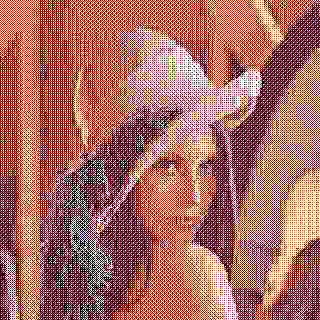
This image may or may not display in your browser. That's intentional. The file is a standard JPEG, but uses arithmetic entropy coding—a feature that was part of JPEG from the start, but almost no software today supports it. Why? It was blocked by patents for nearly two decades, and by the time those expired (2010), almost everyone had moved on.
Whether you see the image is a function of technical decisions buried in browsers, image libraries, and long-expired legal obstacles.
Story: The Hidden Codec
When JPEG became the universal image format in the early 1990s, it included two compression methods: the familiar Huffman coding, and the less common arithmetic entropy coding. The latter is mathematically superior—usually compressing images 5–10% smaller at the same quality. But because IBM and Mitsubishi held patents on key arithmetic coding techniques, support was rare, and most software skipped it.
When the patents finally expired in 2010, few projects bothered to implement the feature. By then, all browsers except Safari (and a few Linux apps) had standardized on baseline/progressive Huffman coding only. Chrome, Firefox, and Windows Photos will not display arithmetic-coded JPEGs. Apple's CoreGraphics library remains one of the very few mainstream decoders to respect the full JPEG spec.
Today, arithmetic JPEGs are a rarity—artifacts of a fork in technological history, more likely to confuse or vanish in front of users than to be seen.
riiiis, 2025
https://aec-ffca.netlify.app/