Legacy Codebase
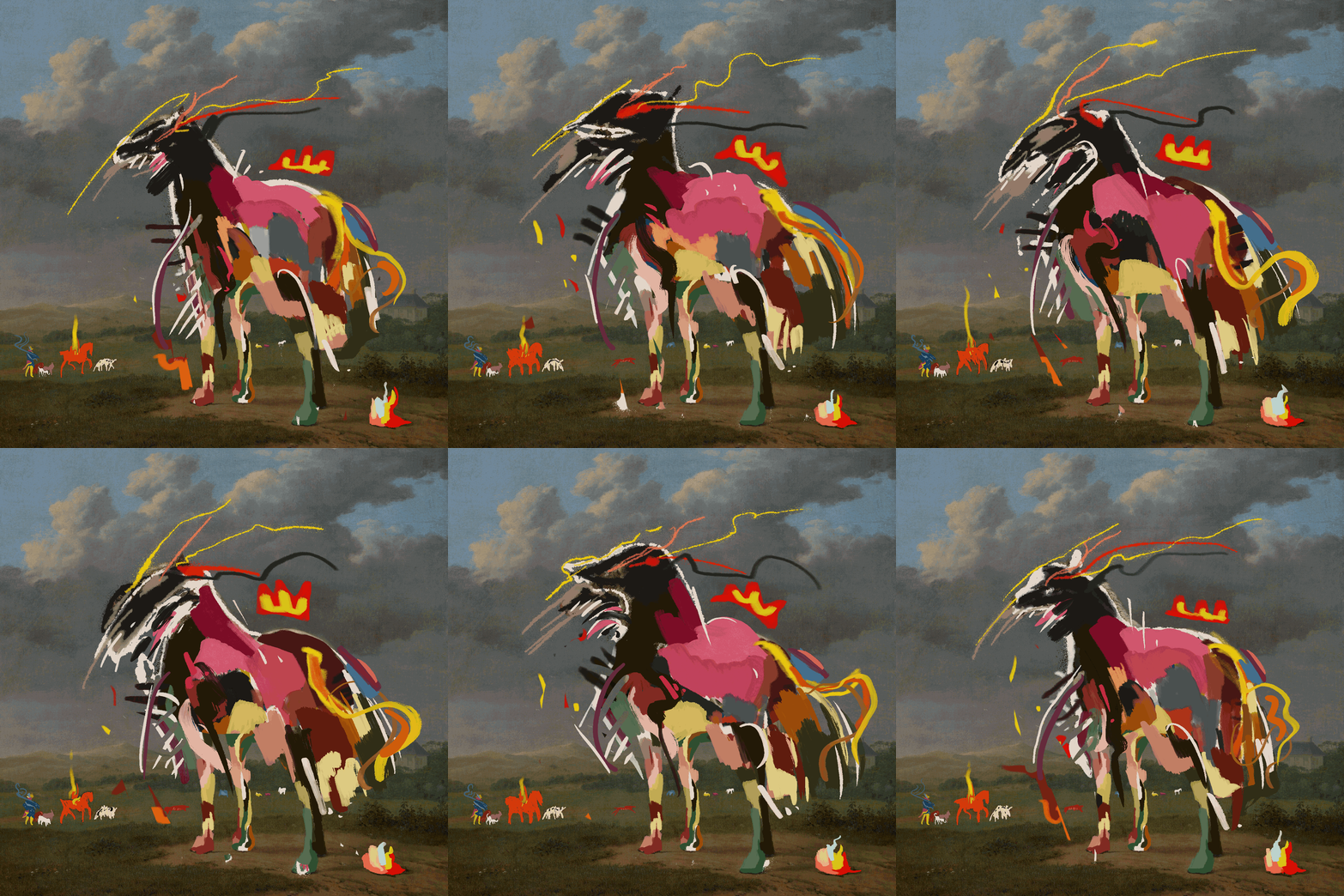
In the background, we identify the original asset, Paulus Potter's "Piebald."
The Form (Static): This is the rigid, anatomically correct structure, rooted in the realism of the Dutch Golden Age. The sky is heavy and stormy, the landscape detailed. It is cold and objective reality. The Function: To represent the horse as an object of ownership and still life. Here, the horse is motionless, captured in a silent eternity.
The Syntax: The strokes characterize a raw, almost sketchy application of saturated primary colors (acid yellow, fiery red, shocking pink) and thick, nervous black outlines. The Deconstructed Anatomy: The horse is no longer skin and muscle. It becomes a skeleton of energy. The digital brushstrokes act like X-rays, revealing the inner spirit rather than the outer shell.
The "Fire Horse" Symbolism: The stylized flames and bursts of red on the ground and the rump celebrate the element of Fire. It is not a destructive blaze, but a creative vitality.
Subject Destabilization: While Potter's horse is rooted to the ground, the "Holly Horse" seems to vibrate. The yellow and red lines emanating from its head act as vectors of speed or external neural connections. The Temporal Glitch: The work creates cognitive dissonance. The eye attempts to focus on the realism (Potter), but is constantly distracted by the urgency of the gesture. I am not painting the horse; I am painting the horse's movement, the very idea of its power, superimposed on its physical image at 15 frames per second in GIF: 4K : 100 Mo