kavanagh
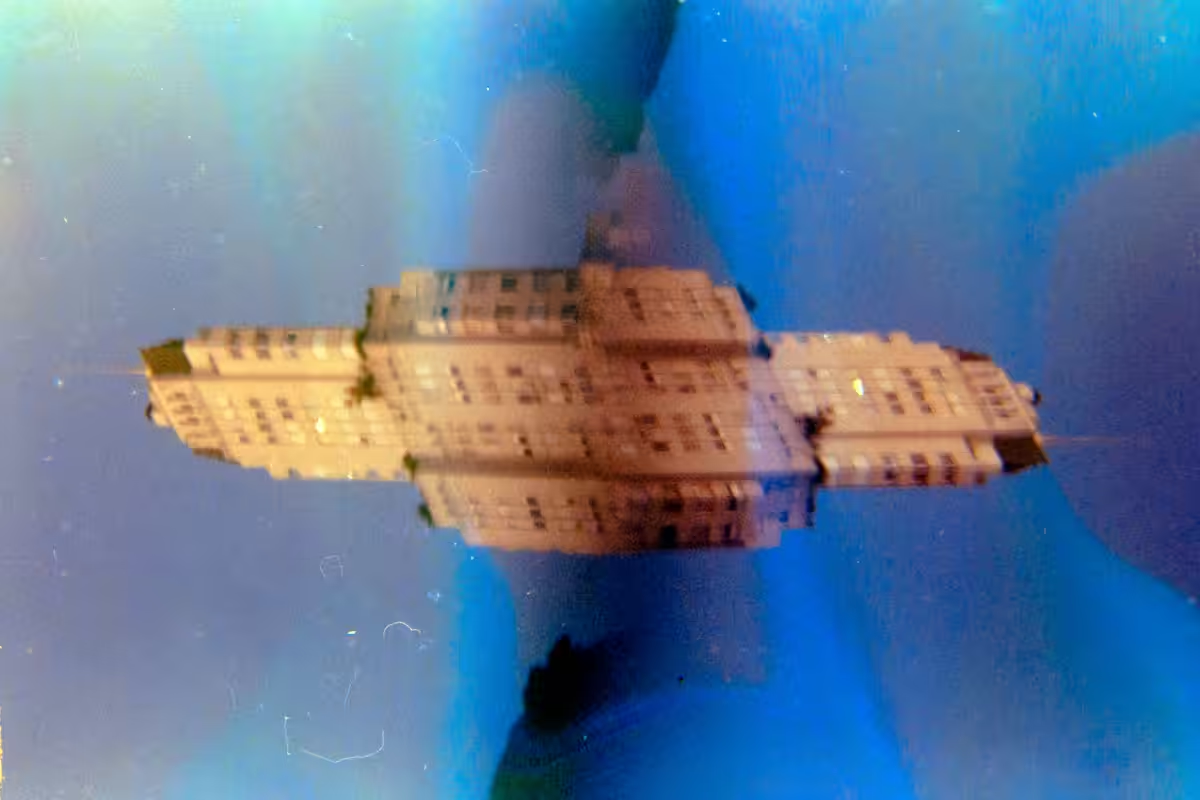
In the heart of Buenos Aires, facing Plaza San Martín, rises one of the city's most iconic structures: the Kavanagh. Its story doesn’t begin with architects or engineers, but with a dispute between two women: Corina Kavanagh and Mercedes Castellanos de Anchorena.
Mercedes belonged to one of the oldest and wealthiest families of Buenos Aires' aristocracy. In 1916, she financed the construction of the Basilica del Santísimo Sacramento, located right across from the family palace, which today is the Palacio San Martín and houses the Ministry of Foreign Affairs. The church served as both a place of worship and a family mausoleum, symbolizing the Anchorena family's religious devotion and social status. Corina, by contrast, came from a very wealthy family but held no noble title. When she fell in love with one of Mercedes’ sons, the Anchorena family rejected the relationship. Corina simply wasn’t “enough” for them.
Humiliated but determined, Corina sold off several inherited estates and commissioned a project without precedent in South America. That is how this building was born. Inaugurated in January 1936, it reached 120 meters in height with 31 floors. It became the tallest skyscraper in Latin America and one of the tallest reinforced concrete buildings in the world at the time. Revolutionary in its rationalist design, it featured clean lines without unnecessary ornamentation, fast elevators, air conditioning, and luxury apartments designed for a new urban elite.
Beyond the record, the building's location was no coincidence. It was built in such a way that it completely blocked Mercedes’ view from her palace to the church she had financed. From then on, the basilica's dome was hidden behind a wall of concrete and pride. Over the years, the building was declared a National Historic Monument. But its story is much more than concrete and blueprints. It is a silent revenge, built brick by brick.
TDA Color 100 + film soup. 2023