Junk Jammers
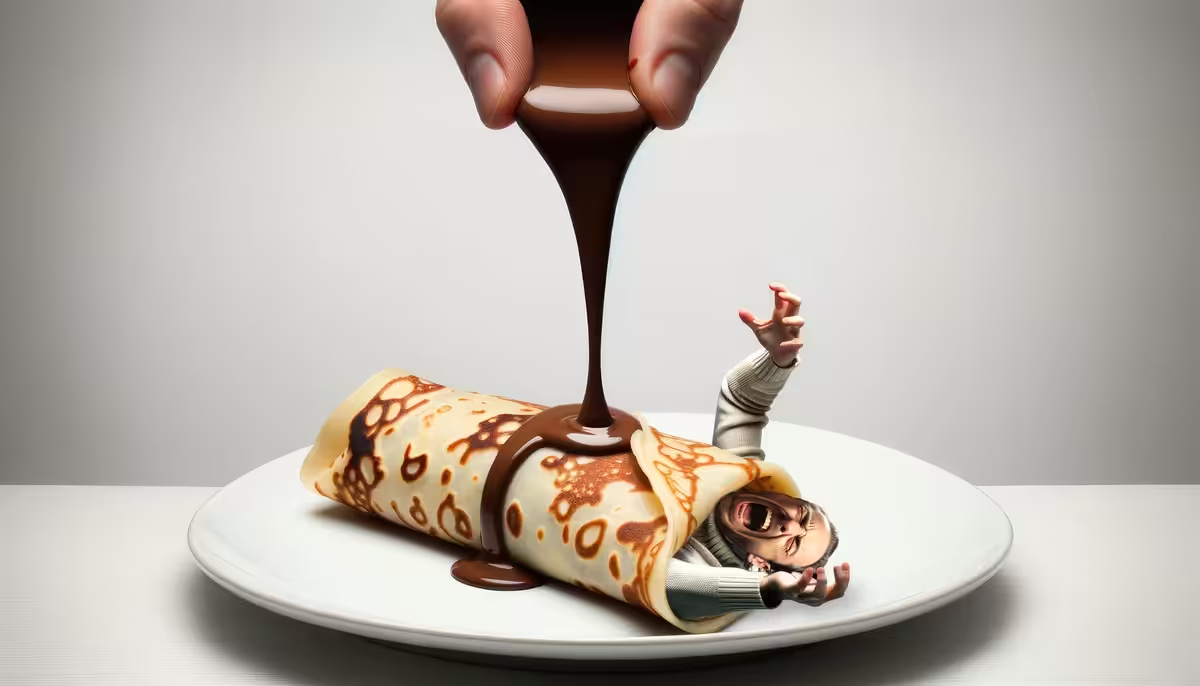
The central figure - a man, ensnared within a crepe, with only fragments of his identity peeking out - is a poignant metaphor for those battling food disorders. He's not just wrapped; he's entrapped, a prisoner of societal expectations and self-imposed standards. His head, the seat of cognition and emotion, along with his arms - symbols of action and agency - are all that emerge from his edible prison. They strain against the confines, desperate for liberation, a scene all too familiar for those who've felt the suffocating embrace of eating disorders.
The drizzle of chocolate, trickling with a notable weightiness, reflects the subtle yet persistent societal pressures and internalized standards.
But this isn't just a tale of despair. The man's evident struggle, the sheer force of his will to break free, stands as a testament to human resilience. Is a beacon of hope, a reminder that no matter how tightly we might feel bound by our struggles, the spirit's desire for freedom and well-being can propel us towards liberation.
This piece is more than just art—it's a conversation starter. It demands awareness, urging viewers to confront and challenge the stigmas and misunderstandings surrounding food disorders. It beckons society to be more understanding, more supportive, and most importantly, more accepting.