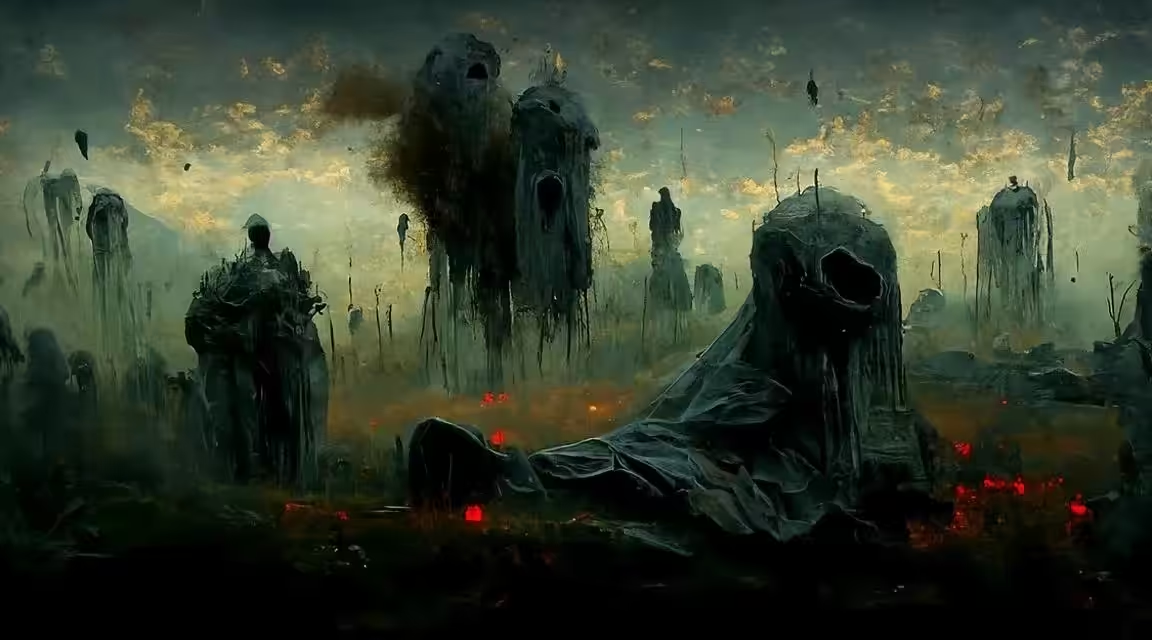
Jinns
Jinn (Arabic: جن, jinn) – also romanized as djinn or anglicized as genie (with the broader meaning of spirit or demon, depending on source)(p22) – are supernatural creatures in early pre-Islamic Arabian religious systems and later in Islamic mythology and theology.
Like humans, they are created with fitra, neither born as believers nor as unbelievers; their attitude depends on whether or not they accept God's guidance. Since jinn are neither innately evil nor innately good, Islam acknowledged spirits from other religions, and was able to adapt spirits from other religions during its expansion. Jinn are not a strictly Islamic concept; they may represent several pagan beliefs integrated into Islam.
In an Islamic context, the term jinn is used for both a collective designation for any supernatural creature and also to refer to a specific type of supernatural creature.(p67) As referring to invisible creatures in general, jinn are often mentioned together with devils (shayāṭīn). Both devils and jinn feature in folklore and are held responsible for misfortune, possession and diseases. The jinn in contrast are sometimes supportive and benevolent. They are mentioned frequently in magical works throughout the Islamic world, to be summoned and bound to a sorcerer, but also in zoological treatises as animals with a subtle body.