Interference and Aberration
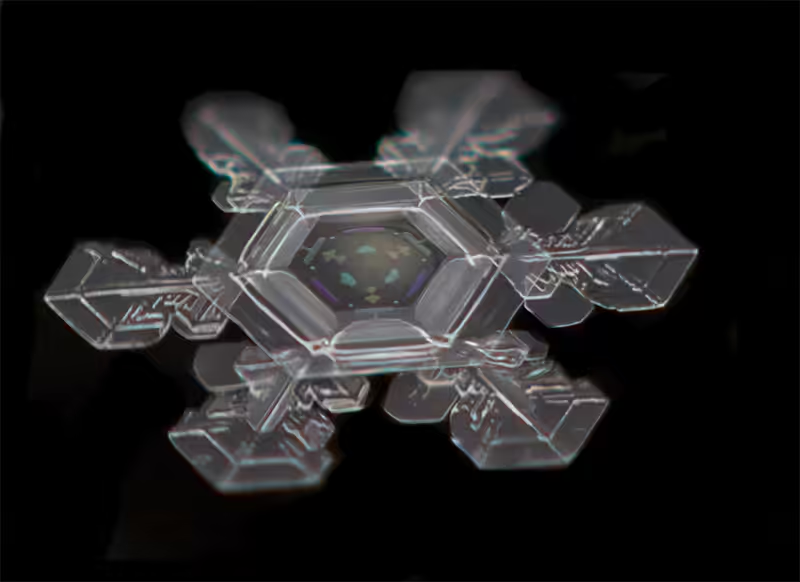
This is a real photograph of a snowflake up close and personal. This particular flake formed in rarer conditions that favor plates (as opposed to the typical spindles seen in most flakes) and is usually only seen in a narrow temperature range of -3 to -5 C. When this happens, even rarer, a thin layer of different density ice can form over the center of the flake leading to a process of thin film interference (the same type of interference seen when a puddle of water has a thin layer of gasoline on top) as each layer refracts light leading to enhancement and diminishment of certain colors as their waves interact. To capture this very subtle coloring, I had to allow for some chromatic aberration (coloring at the tips of the snowflake) which are artefactual.