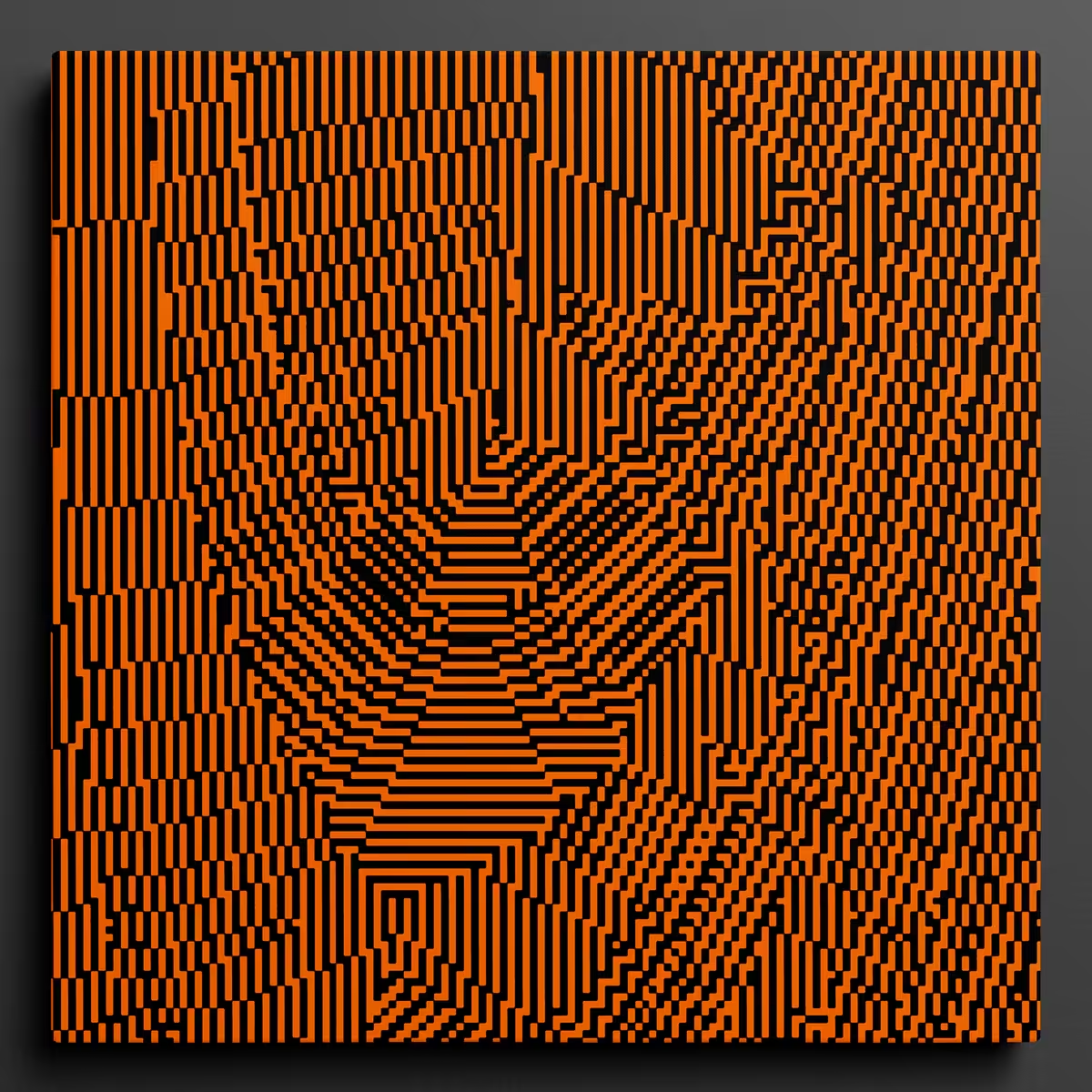
hard to learn
Sensory communication designs inspired by a conceptual psychological model of perceptual processing, and the generative design process. The perceptual processing of visual information involves three stages. (1) Feature map - pre-conscious rapid processing of features, orientation, texture, patterns, shape; (2) Pattern finding by subdividing the visual field from feature maps into simple patterns, regions of colour, and texture; (3) Goal-oriented attentive communication between the working memory which briefly holds onto the newly presented visual information and long-term memory, a relationship between everything you've seen before, and now. The last stage is what 'tells' you really what it is you're looking at. Your perception is informed by what you're doing, what your goal is, what problem you are trying to solve. Features, patterns, relations, directed by attention, guiding you to 'what you think you see'. Throughout the creation of these pieces, the same generative algorithm, a set of generative processes with alternating values, was used to generate images that present a 'puzzle' and provoke an attentive 'searching' which asks 'so what is it that you see'? So what is it that you see?