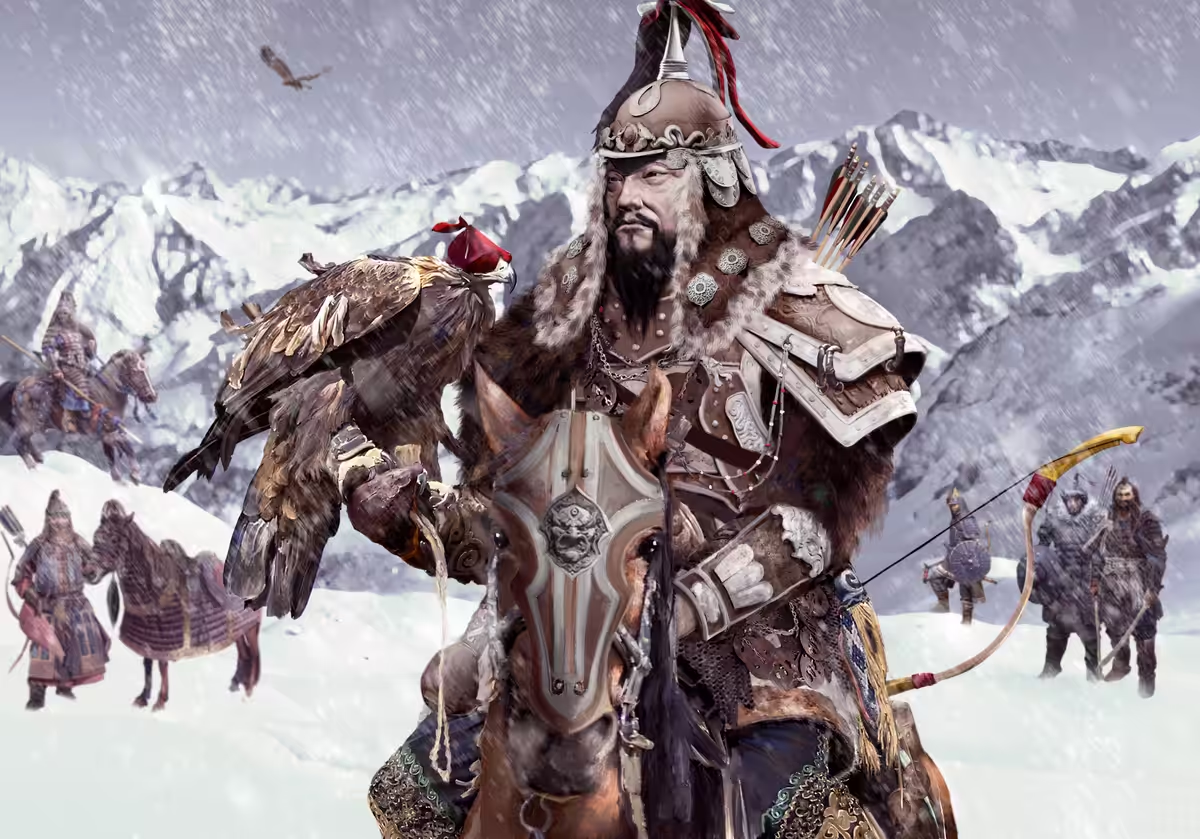
Genghis Khan (c. 1167 – August 18, 1227) was a Mongolian ruler who became one of the world's most powerful military leaders, who joined with the Mongol tribes and started the Mongol Empire. As a ruler, Genghis lowered taxes and got rid of taxes for doctors, teachers and priests. He created the first international postal system. His empire was not known to be greedy with their loot; instead he would spread the wealth among the conquering Mongolians. Temujin eradicated torture, and held no prisoners; instead he merely killed his enemies. In doing so, he became respected. He completely re-made the feudal system to disregard people’s ethnicity and instead based it on loyalty and accomplishments. He gave his people religious freedom, unlike empires that limited their people to one religion.
These benefits were enjoyed by those who surrendered immediately to the Mongol invaders. Those populations that resisted would be massacred as a warning to other towns and cities. These massacres were a method of psychological warfare to terrify those not yet conquered. The terror endured, and helped color the historical portrayal of the Mongols. He was a Mongol Emperor who was very successful in battles, conquering many other peoples such as the Jin Dynasty. He was a very strong and powerful emperor who occupied much of China and some surrounding countries of China. His children and his grandchildren started the largest empire in the world.