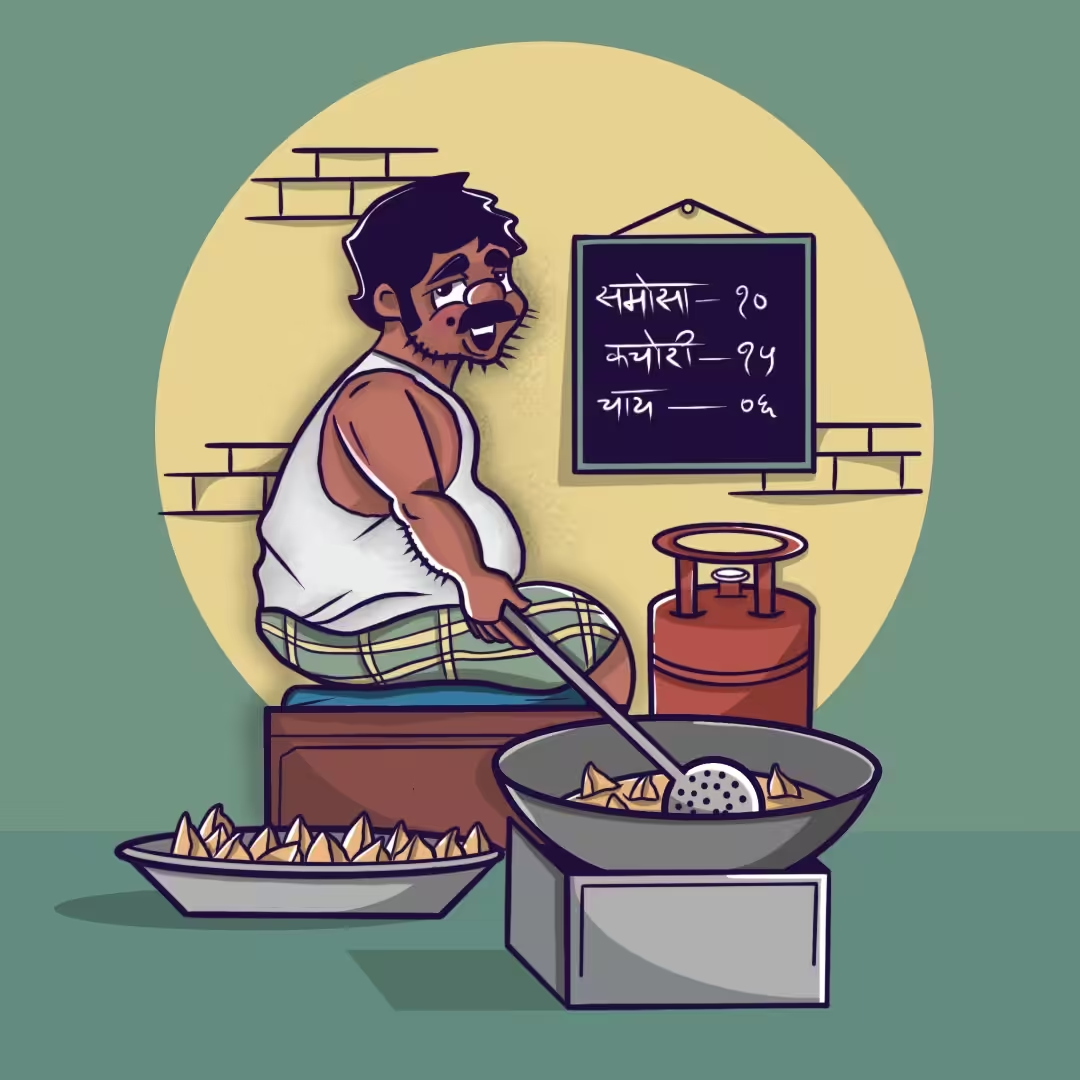
Garam Samosa(e)
The first mention of samosa in the royal era began when noted poet and scholar of the Delhi Sultanate, Amir Khusro spoke of samosa prepared from meat, ghee, and onion that nobles relished during that time. Later, in 14th-century traveller, Ibn Battuta, mentioned about sambusak (aka samosa) made with minced meat, walnuts, pistachios, almonds, and spices being served as part of a royal meal in the court of Muhammad bin Tughluq. Even in the Mughal dynasty, Ain-i-Akbari, has mentioned the recipe of samosa known as ‘Sanbúsah’.There are more than 15-20 desi avatars of samosa being relished pan-India. In Hyderabad, it is called ‘Lukhmi’, which has a thicker crust and is stuffed with minced meat. While in South India, samosas are prepared with cabbage, carrots and curry leaves as stuffing. In Bengal region, it is called ‘Shingaras’, and is available in both savoury and sweet flavours. While in Gujarat, one can find a tinier version of standard samosa, filled with French beans and sweet peas. And in Goa, the samosa is called ‘chamuças’ and is prepared with minced beef, chicken or pork. - Reference from the "Times of India" .