Galactic
A trillion swirling stars. Billions of possible worlds.
In the early days of astronomy it was called the “little cloud” or “island universe.”
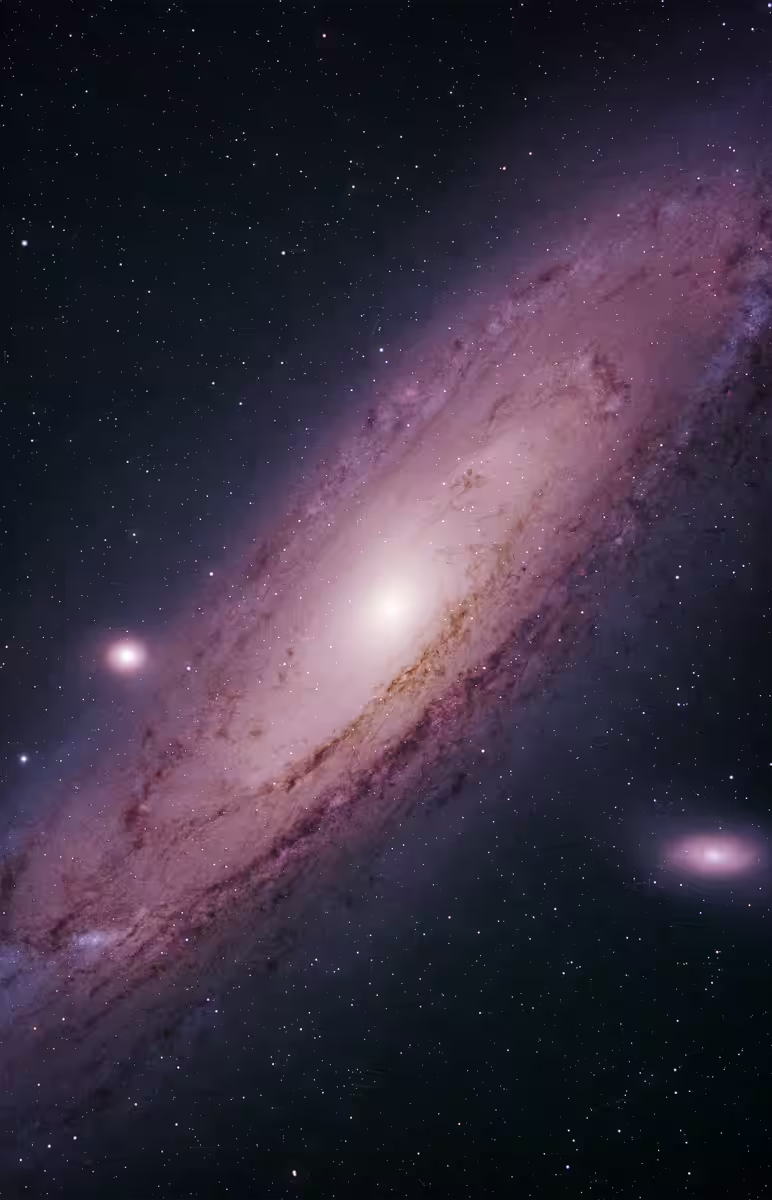
Named after the constellation in which it appears, Andromeda is the most distant object visible to the naked eye. It is a glorious, ancient spiral in the sky, larger even than our own Milky Way.
Take a moment to dive into this wilderness of stars, full of starways, burning clouds, and lanes of dust.
Turning our gaze to such a thing cannot help but change us. We are, after all, a seeking race. Not many centuries ago, explorers stood on the shores of Europe, gazing out at what appeared to be an uncrossable expanse, an ocean without end.
Now our tiny world is traveled, the blank edges of the map filled in. So we turn our gaze to the stars, peering billions of years into the past, seeing galaxies as they appeared eons ago. And still we hope. What will our brave race do next, as we test ourselves again and again against the endless beyond?