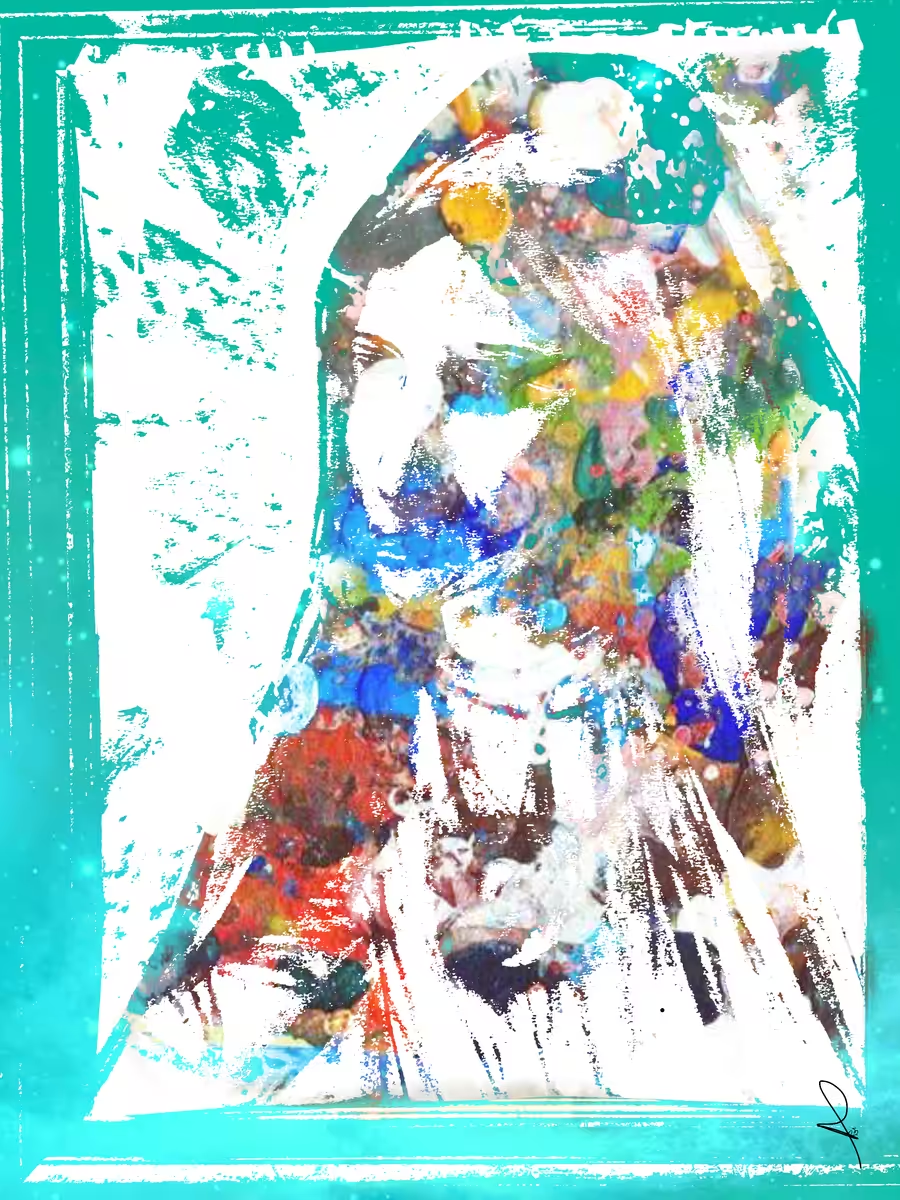
“Fragmented Grace” originates as a charcoal drawing — raw, tactile, and emotionally charged. Sketched by hand, the image began as a meditation on form, femininity, and spiritual presence. The figure, reminiscent of traditional sacred portraits, emerged intuitively from dark lines and soft smudges. Yet what began in charcoal did not end there.
Through digital layering in Photoshop, the image was recontextualized. Paint-like bursts of color — expressive, chaotic, and uncontained — now overlay the delicate framework of the original drawing. This transformation bridges two worlds: the analog and the digital, the spiritual and the psychological. The original sacred calm of the figure becomes a canvas for emotional complexity, personal history, and layered identity.
The figure’s face remains partially visible, evoking both intimacy and distance. She appears contemplative, watching from beneath veils of color and white disruption. What might have been a serene icon is now fragmented — not in a way that breaks her, but in a way that reveals new meaning. The act of obscuring becomes an act of revealing.
Framed in a distressed turquoise border, the entire composition mimics the form of religious iconography while simultaneously challenging its conventions. The hand-drawn origin gives the piece a soul; the digital work gives it agency. It is not simply a modern reinterpretation of the sacred feminine — it is a reconstruction of it, forged through process, tension, and intuition.
“Fragmented Grace” asks what remains sacred when perfection is disrupted, and what becomes visible when the veil is not lifted, but rewritten.