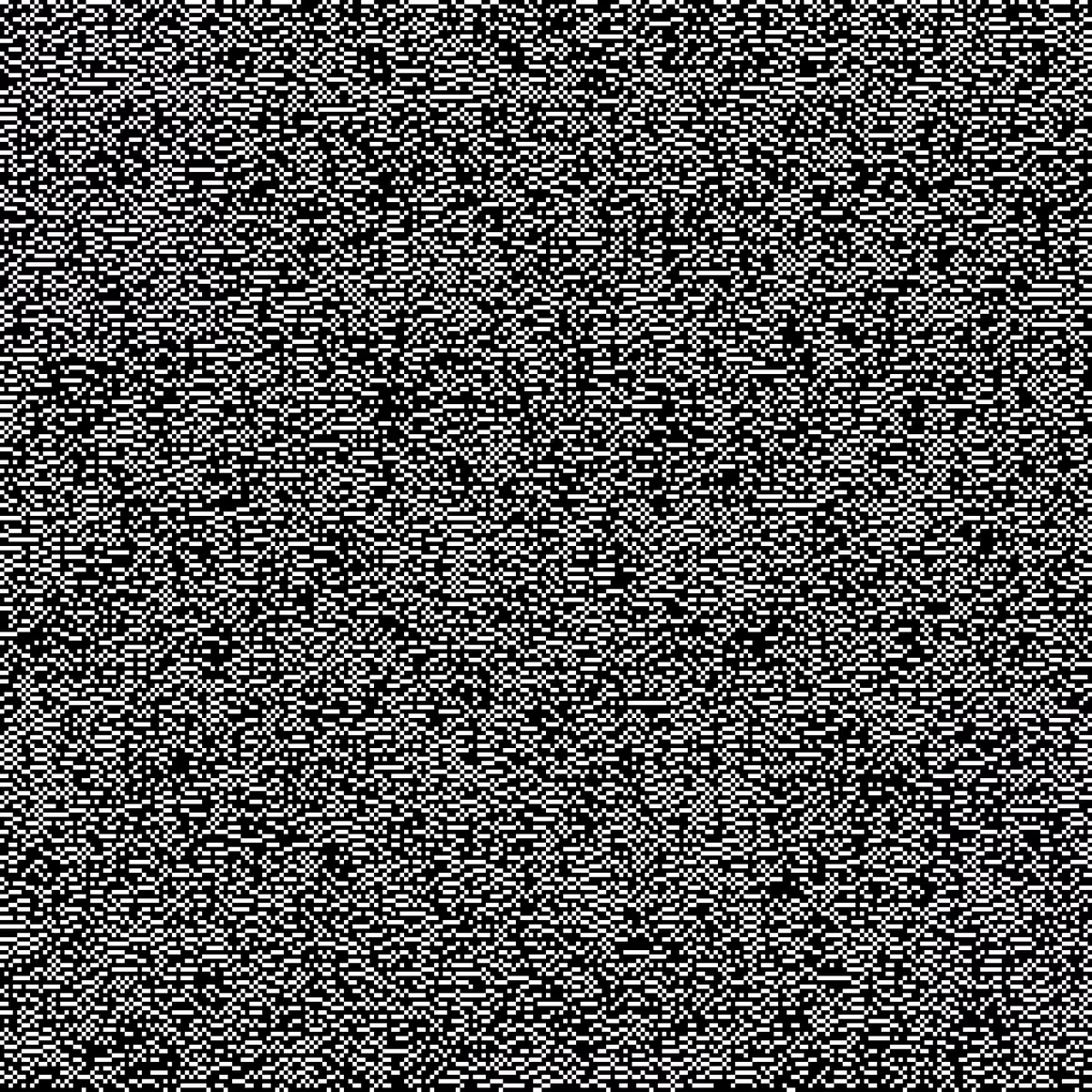
FNV-M-A
This artwork uses a hash function to, given an arbitrary number of input bits from each square "cell", generate a single output bit (0 or 1). The (black/white) color of each square cell corresponds to the binary output value (0/1) at that point on the grid.
While the output may appear random, it does follow a single main pattern which distinguishes the artwork from pure random noise:
- No two white squares may be directly adjacent in the VERTICAL direction
The hash function used in this artwork is a modified version of the "FNV-1A" algorithm. This relatively simple approach to non-cryptographic hashing was invented in 1991 by Glenn Fowler, Landon Curt Noll, and Kiem-Phong Vo. I learned about this algorithm while seeking a deterministic-but-non-continuous alternative to Perlin Noise. My modified version of the algorithm, used in this artwork, is not computationally identical but has many similarities and shares the same "XOR by each byte, then multiply the output by a prime number" approach. I have nicknamed the three base variants of this algorithm "FNV-M-A", "FNV-M-B", and "FNV-M-C". This is where the title "FNV-M-A" originates.
Created by @MathMakesArt (https://mathmakes.art) on 2021/09/02. 2540 px square generated in p5.js as a (254 x 254) square grid where each cell has (10 x 10) pixel dimensions. This mint was created in celebration of my Twitter account @MathMakesArt reaching 2000 followers on 2021/09/02. This artwork is not available on the primary market, but will instead be distributed to 10 specific Twitter followers who followed me at milestone numbers (1, 5, 10, 25, 50, 100, 250, 500, 1000, 2000).