EXWF - The Crossing
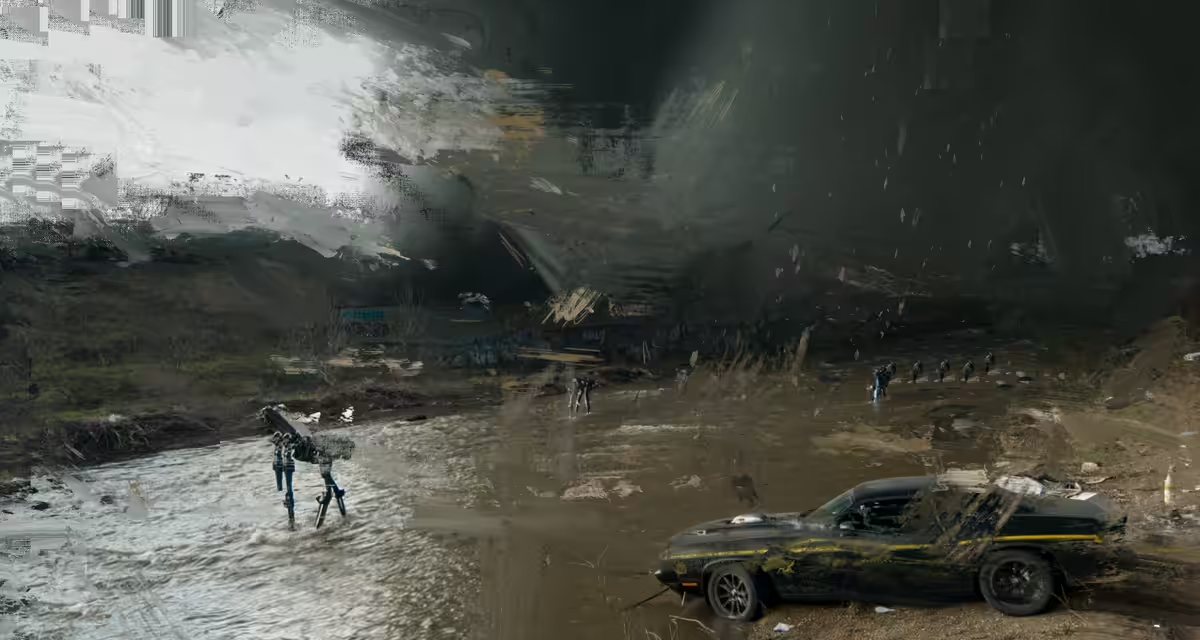
One enters the water. Others follow, slow and deliberate—metal limbs where memory used to be. A storm gathers like a curse. The car stays parked, engine dead, pointed nowhere. No one flees. No one speaks. Whatever comes next has already begun.
In Existence Without Form, Harman offers a prophetic hallucination of the near-future metropolis—not through the lens of architecture or AI, but through the slow, defiant act of release. Across a series of raw, fractured postpaintings, a shadow-world unfolds: rivers reek of circuitry, alleyways glow with drone-light, and hooded figures move like ghosts through the wreckage of a city that no longer dreams.
These figures—part eco-terrorist, part street mystic—are not here to disrupt with spectacle, but to heal in silence. They breed natural fish in abandoned zones, then slip them back into the poisoned waterways like encrypted messages. Their gesture is mythic, ritualistic. A refusal of synthetic time. A protest against the quantified world.
But always, The CORP looms. A shapeless technocratic entity, it manufactures robotic predators—fish built to seek and destroy, greyhounds engineered for capture, security machines with joints too human to feel safe. These aren’t just tools. They are ideology in motion. Surveillance re-skinned as progress. Predation polished into a product demo.
The postpaintings themselves carry this tension—rendered like corrupted memories, splashed with industrial residue, and blurred at the edges like surveillance footage fed back through a faulty archive. Some feel pulled from the memory of an uprising that never made the news. Others resemble the last recorded images before an entire district was erased.
Existence Without Form is not a warning. It’s a map. A survival protocol disguised as art. A declaration that the natural world, even when imitated, cannot be replaced. And that to release something wild—against every system telling you not to—is a radical act of existence.