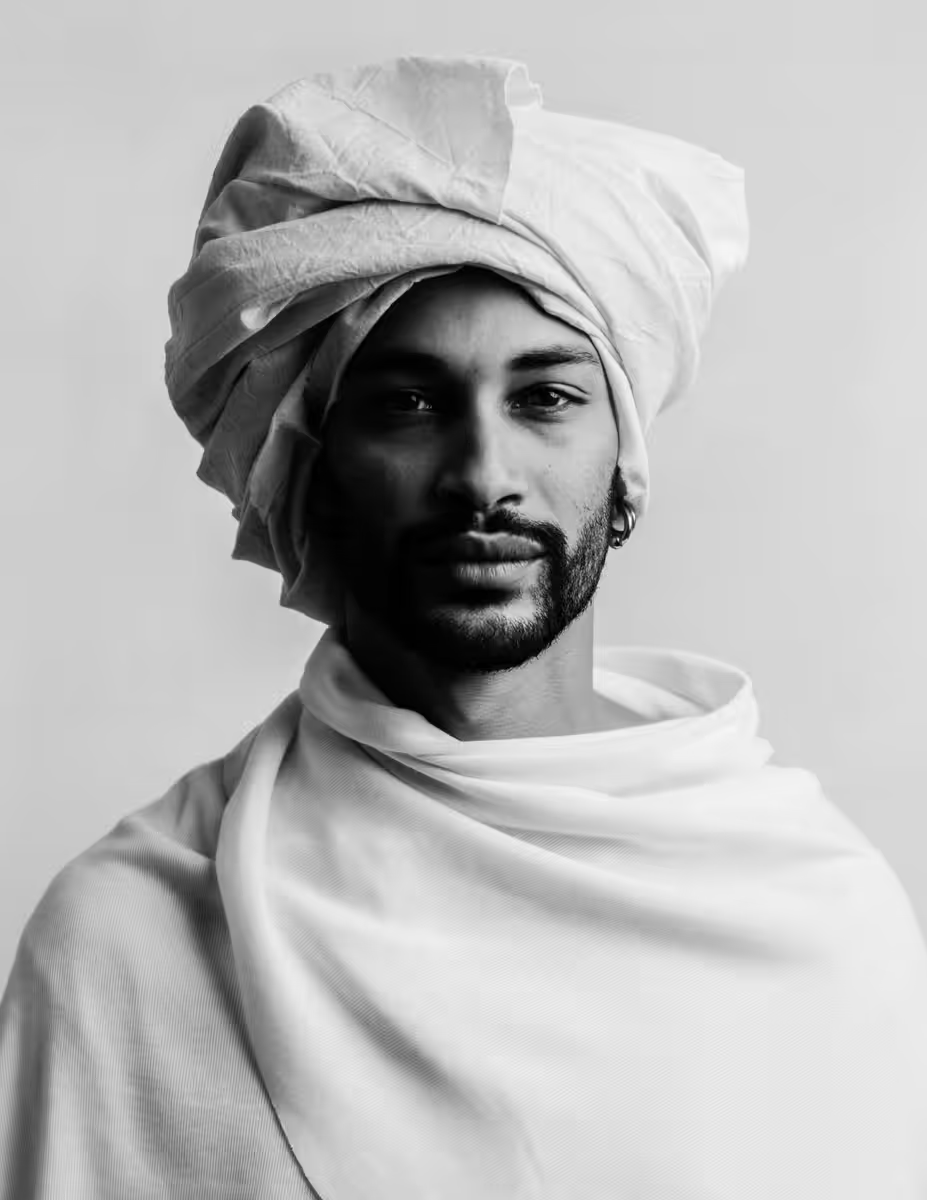
Eric
Eric was born in Luanda, Angola. His father is from the north of Portugal, near the border with Spain and his mother is half Angolan and half Cape Verdean. His father was born in 1941, so for the first 34 years of his life Angola was still a Portuguese colony. A carpenter by trade, like his father and his father before him, the family took the decision to move to Angola when he was 16 in search of a better life. When Eric was 3, civil war erupted in Angola and the family were forced to relocate to Portugal. When Eric was 8, he travelled back to Angola to see his extended family and clearly remembers seeing the bullet holes in his family home in Luanda. He hasn’t been back since.
Eric talks openly about his identity crisis as a youth. Growing up in Lisbon he felt as though he was living a double life. At home he played the part of the dutiful African son, yet outside of the house with his friends he took on a very different, more European persona. He speaks Portuguese with a Lisbon accent up until the point that he gets angry or excited which is when his Angolan twang comes out. Eric describes his inner monologue as white, yet considers himself more Black than white. Even his hair mirrors his identity struggle as he was born with blonde, curly hair before it became completely straight. Every time he shaves it, it grows back differently.
Eric often gets mistaken for being Brazilian or North African. Once he even got mistaken for being Vietnamese. He believes that even though race itself is biologically insignificant, he likens it to a pedestrian crossing. In and of itself a pedestrian crossing possesses no meaning, yet the fact that cars slow down and stop when they approach means that we bestow meaning to it.