Emergence
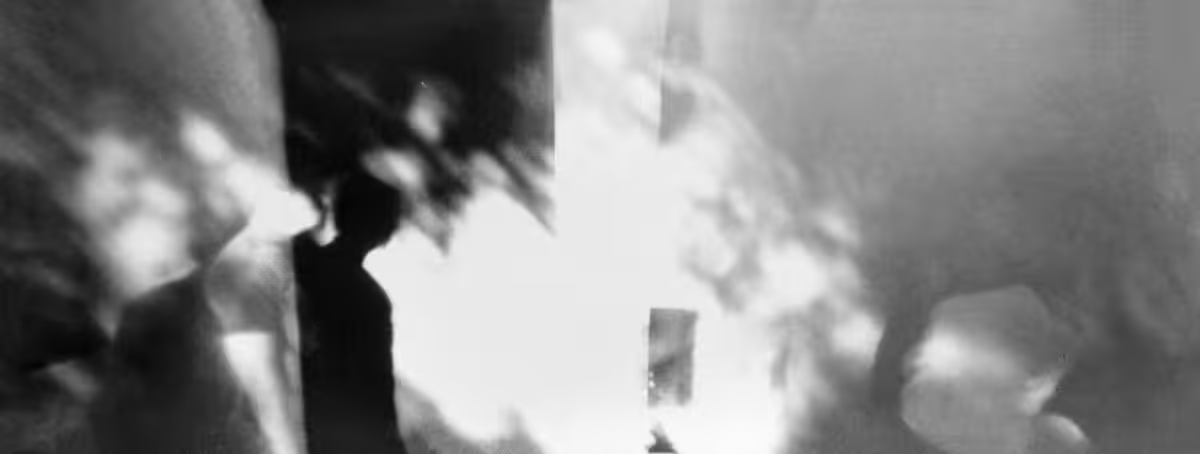
Emergence (2004) is a handmade pinhole photograph that reimagines the camera as a prism through which multiple space-time instances intertwine. Built from wood and light, the large-format camera becomes a vessel for temporal layering—each exposure a distinct temporal fragment, coexisting within a single sheet of light-sensitive paper.
Emergence stands among the artist's earliest long-exposure experiments using handcrafted pinhole cameras. The piece consists of a strip of paper that holds four separate exposures, each lasting approximately 15 minutes. Conducted entirely in situ, the process involved exposing the paper, masking selected sections in complete darkness, and returning to the field to expose new fragments. The image was constructed blind, relying solely on an intuitive relationship with the latent image—a method that demanded precision, patience, and a deep trust in the unseen.
Conceptually, Emergence reflects on the non-linear and multidimensional nature of existence. It proposes that being is not confined to fixed times or locations; rather, it unfolds across various layers. Forward or backward, emergence is indifferent to direction. The black hole opens both ways. Movement is essential, but borders are illusory. To exist is to traverse. To be caught in the vortex—is merely an option.