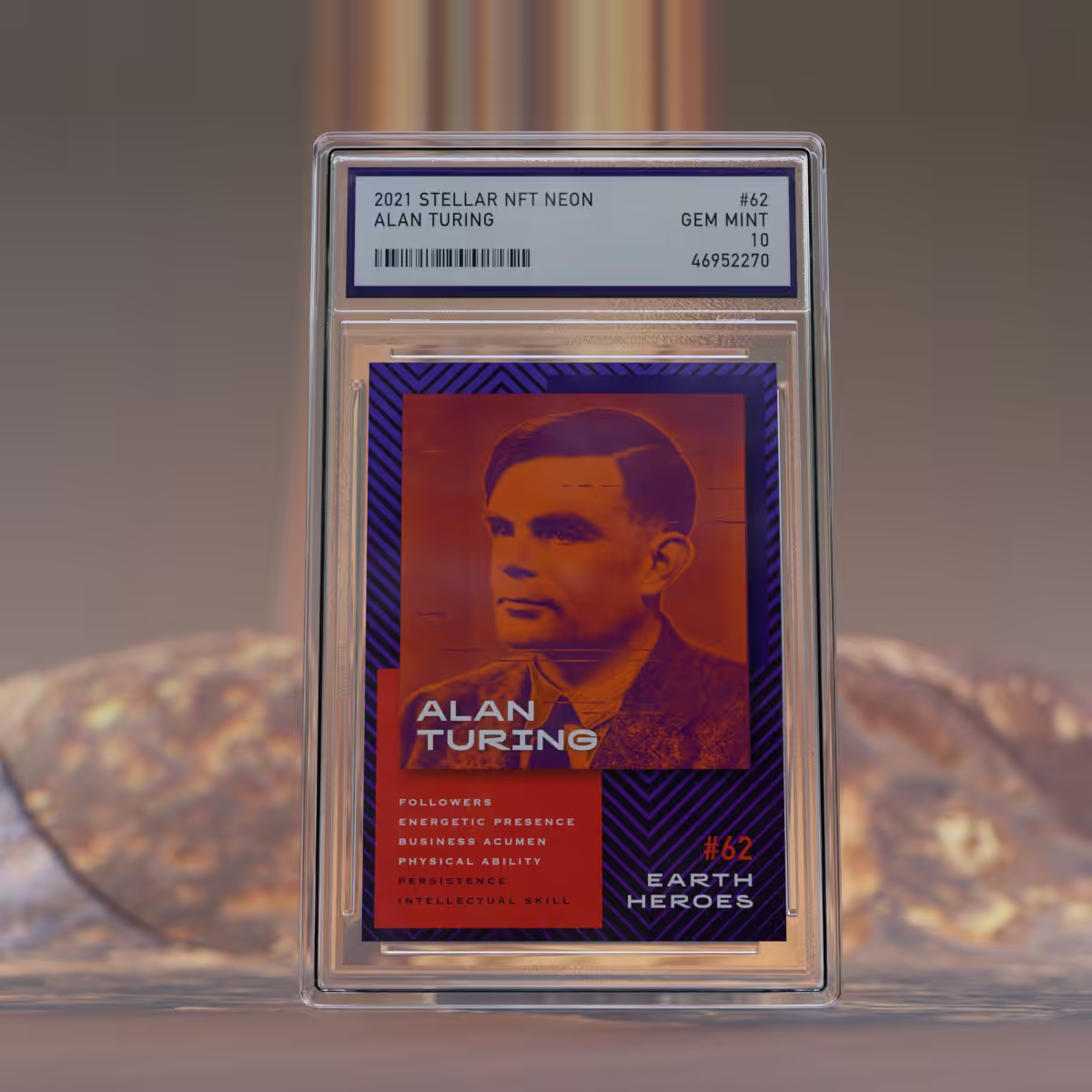
Earth Hero - Alan Turing
Alan Turing’s calculations made computers possible and helped win a war. Turing’s mathematical genius allowed him to foresee the possibility and function of computer like machines before the existence of the necessary technology. Laying out the theory for such devices in an essay in 1936, his revolutionary work provided the foundation for modern computers.
At the start of World War Two Turing, along with other mathematicians, was recruited to break enemy codes. Working at Bletchley Park, Turing built a machine called a Bombe. It sped-up code-cracking efforts from weeks to hours by trying multiple permutations.
Turing was a gay man at a time when homosexuality was illegal. Despite his wartime contribution he was arrested for gross indecency in 1952 and given a stark choice between prison and chemical castration (opting for the latter). The arrest also lost him his security clearance and two years later Turing died of cyanide poisoning – whether it was suicide or not is still debated. A campaign to grant him a pardon, fittingly started by e-petition, resulted in him being granted one posthumously in 2013. A subsequent legal amendment dubbed Turing’s Law pardoned 65,000 other people convicted of the same ‘crimes’.